Blog

NTC Blog Posts

Blog

UCLA’s Margaret Peters Denied Involvement, Her Emails Tell a Different Story

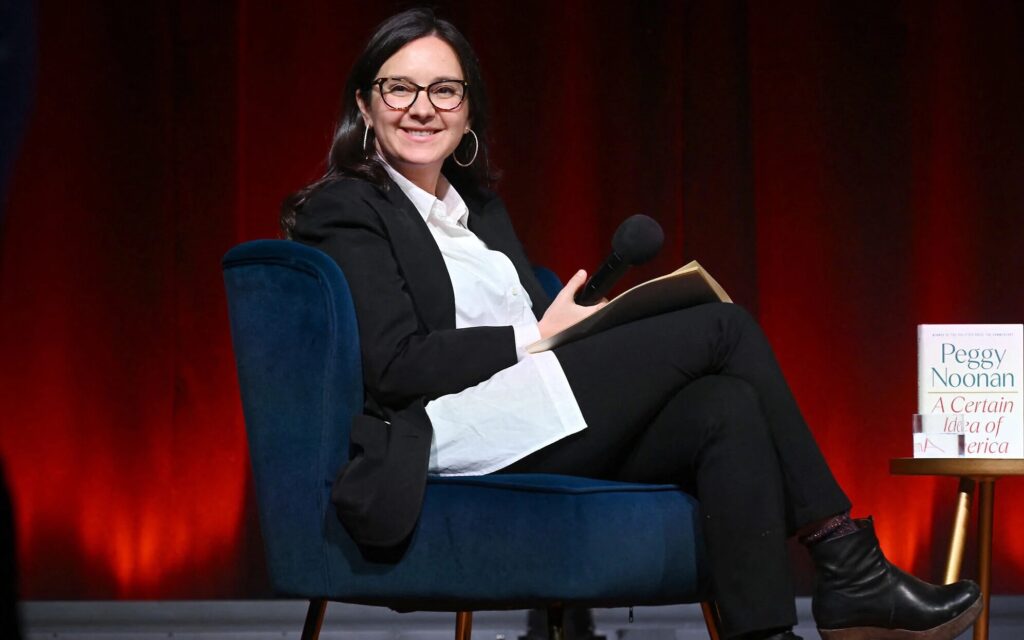
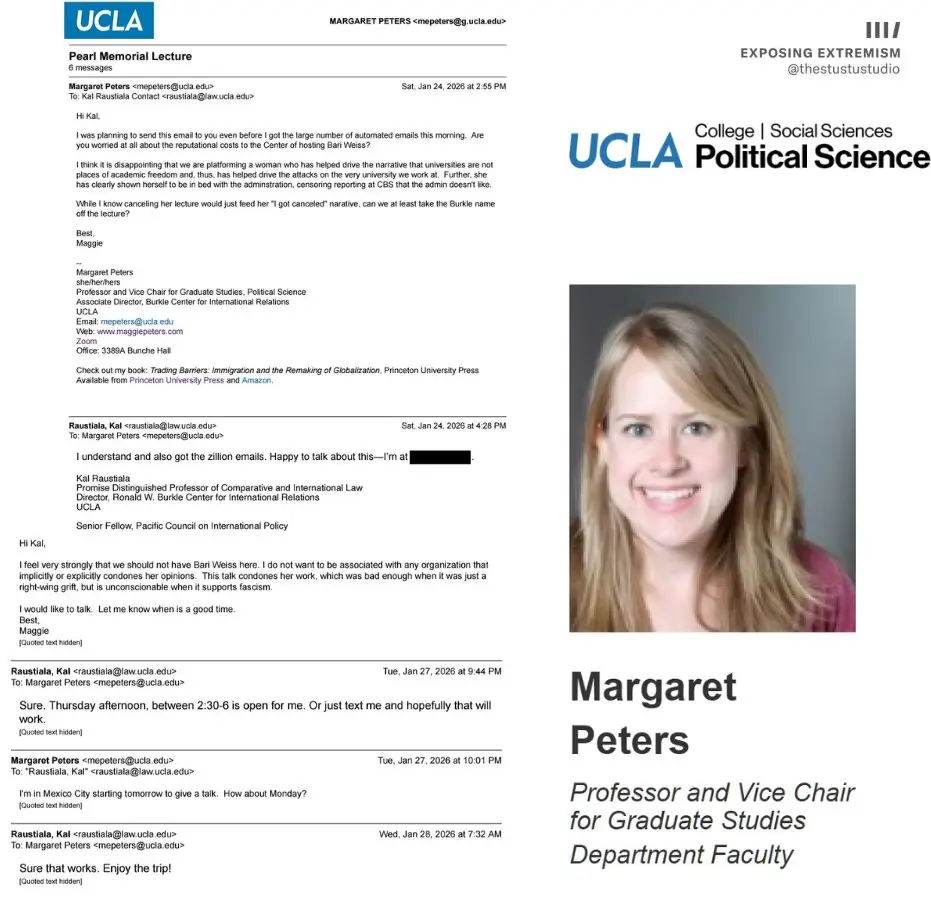
For weeks, the situation surrounding the Daniel Pearl Memorial Lecture at UCLA followed a familiar pattern. A ‘controversial speaker’ (CBS’s Bari Weiss), internal disagreement, and public statements that attempted to downplay how decisions were being made behind the scenes. But thanks to newly released public records, that narrative is no longer sustainable. The latest batch of emails, obtained through public records requests by the Manhattan Institute and brought into wider public view through reporting from The Washington Free Beacon and coverage involving Jewish News Syndicate, provide a much clearer picture of what actually happened inside UCLA. These records do not simply add context. They directly contradict prior public statements made by UCLA political science professor Margaret Peters, who also serves as the Associate Director of the Burkle Center for International Relations. Previously, as we noted in our earlier blog post, Peters had already drawn scrutiny after reports indicated she threatened to resign from her leadership role at UCLA’s Burkle Center if journalist Bari Weiss was allowed to deliver the lecture. At the time, that raised legitimate concerns about whether internal pressure was being applied to influence the event. However, Peters publicly stated that she “wasn’t involved in discussions about whether the event would proceed,” suggesting a degree of separation from any decision-making process. The newly released emails make that claim difficult to reconcile with reality. In her own words, Peters raised concerns directly to UCLA leadership about the “reputational costs” of hosting Weiss. She characterized Weiss as someone who had contributed to “narratives that universities are not places of academic freedom and, thus, has helped drive the attacks on the very university we work at.” In the same correspondence, Peters suggested that while canceling the lecture outright might “just feed her ‘I got canceled’ narrative,” she advocated for the university to remove the Burkle Center’s name from the event. That is not the posture of someone uninvolved, rather it is the exact posture of someone actively engaged in shaping the institution’s response. Additional outbound emails reinforce that this was not a single passing remark or an isolated concern. Peters communicated a strong personal objection to Weiss’s participation and indicated she did not want to be associated with any organization that, in her view, implicitly supported Weiss’s work. She explicitly asked to discuss the matter further with the director of the Burkle Center, signaling an ongoing effort to influence how the situation would be handled. These communications reflect a sustained level of involvement that stands in clear tension with her public characterization of her role. It is important to be precise about what this does and does not show. Universities are places where faculty members are expected to have opinions and to express them. Disagreement with a speaker is not unusual, nor is it inappropriate. What raises concern here is the disconnect between private actions and public statements. When a senior academic leader is actively communicating with decision-makers, proposing institutional changes related to an event, and seeking to distance her own center from that event, it is reasonable to describe that as involvement. From the perspective of institutional accountability, that distinction matters. Public trust in universities depends not only on the decisions they make, but on how transparently those decisions are communicated. When there is a gap between internal activity and external statements, it creates confusion at best and undermines credibility at worst. The role of outside organizations and journalists in bringing this information forward is also worth noting. Public records laws exist precisely so that the public can better understand how decisions are made within taxpayer-supported institutions. In this case, the Manhattan Institute’s records requests, combined with reporting from the Washington Free Beacon and follow-up coverage from Jewish News Syndicate, helped surface information that would not otherwise have been available. That process is an essential part of ensuring transparency and accountability. Taken together, the timeline is now clearer. Initial reporting highlighted internal objections and the possibility of resignation. Subsequent public statements attempted to minimize involvement. Now, the underlying communications show that Peters was, in fact, engaging with leadership, raising objections, and proposing specific steps related to Weiss’ lecture. Readers can draw their own conclusions about how to interpret that sequence of events, but the factual record is no longer in dispute. Our focus is on examining whether institutions and their leaders are living up to the standards they publicly promote. This situation raises straightforward questions about consistency, transparency, and accountability. Moreover, The Burkle Center exists to foster discussion, international dialogue, and serious engagement with complex global issues. Leadership at such a center carries with it a responsibility to model intellectual openness. Disagreement with a speaker’s views is expected in academia, but attempting to prevent those views from being heard at all is something very different. When public statements do not align with documented internal actions, it is appropriate to ask for clarification. UCLA and Professor Peters now have an opportunity to address those questions directly. Clear explanations, grounded in the full context of the communications, would go a long way toward restoring confidence in how these decisions were handled, then and how they are handled moving forward.  
Blog

CODEPINK’s Cuba Trip Exposes the Left’s Favorite Double Standard

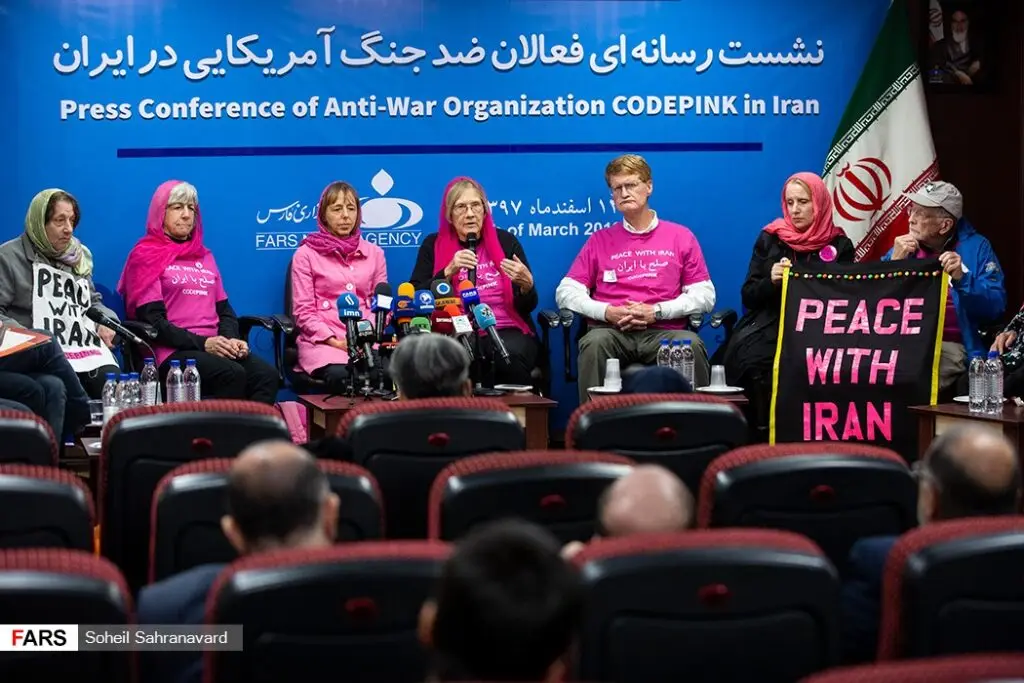
Champagne Socialists in Havana  At a moment when ordinary Cubans are enduring rolling blackouts, food shortages, and a collapsing infrastructure, the activists of CODEPINK decided it was the perfect time for a “solidarity” trip to Havana. What followed was not solidarity—it was a complete spectacle. Reports from the trip reveal a jarring contradiction: while everyday Cubans ration electricity and struggle to access basic necessities, members of CODEPINK and their allies stayed in upscale hotels, complete with generator-backed electricity shielded from the very crisis they claim to highlight. Beyond accommodations, the optics extended to personal appearance. Photos and coverage from the trip show some participants and affiliated supporters wearing high-end, designer-style clothing—an uncomfortable contrast against the backdrop of a country where many citizens are struggling to access basic goods. This is not a minor oversight—it has rightfully become the entire story. Solidarity for Thee, Comfort for Me There is something deeply revealing about activists who claim to stand with the oppressed… so long as they don’t have to live like them. Cuba is not experiencing a mild inconvenience. The communist nation has been hit with widespread power outages, severe economic contraction, and major shortages of food and medicine. Families are navigating daily life without reliable electricity, hospitals are strained, and basic services are inconsistent or nonexistent at best. And into this reality steps CODEPINK, staging music and mural painting events, documenting their journey, and promoting their cause, all while staying insulated from the actual hardship. If solidarity means anything, it requires proximity to truth. What CODEPINK demonstrated instead was proximity to privilege. A One-Sided Moral Lens Throughout the trip, CODEPINK’s messaging remained predictable: blame the United States, oppose President Trump and Secretary of State Marco Rubio. The U.S. embargo, they argue, is the central cause of Cuba’s suffering. That claim is repeated endlessly, often with moral certainty and zero nuance. What’s missing is just as telling. There is no serious reckoning with the Cuban government’s role in the country’s economic dysfunction. No sustained criticism of a regime that tightly controls markets, restricts political freedoms, and manages the very distribution systems through which aid flows. In CODEPINK’s worldview, accountability appears to travel in only one direction as their own home country (the United States) is scrutinized relentlessly. They treat the Cuban regime as if they’re a passive victim which is not analytical in anyway, rather its full of nothing less of ideology. Selective Outrage Is Not A Principle CODEPINK brands itself as anti-war, anti-imperialist, and committed to justice, but those principles seem to depend heavily on geography. When it comes to the United States or its allies, the rhetoric is absolute. When it comes to regimes aligned against the U.S., the tone softens or disappears entirely. Cuba is not unique in this regard. It is simply the latest example of a broader pattern: outrage deployed selectively, criticism applied inconsistently, and moral clarity reserved for only one side of the equation. This is not a movement guided by universal values, rather it’s a movement guided by preferred targets. Turning Crisis Into Content Perhaps the most distasteful element of the CODEPINK’s entire trip was the way it blurred the line between humanitarian concern and political theater. Concerts were staged. Twitch streamers were highlighted. A copious amount of content was produced for the internet. The entire trip became a stream of social media moments and activist branding exercises. All of it unfolding against the backdrop of a country full of children and families in genuine distress. There is a difference between raising awareness and exploiting a crisis to advance a narrative, and CODEPINK’s trip often felt like the latter. Cuba became less a place of suffering to be understood and more a backdrop to be used. Where Does The Aid Actually Go? CODEPINK has emphasized that their trip included humanitarian aid which seems like a positive moment for people in desperate times, however, it raises an unavoidable questions: How was that aid distributed? Who was it distributed to? How far spread was the aid? Where and what future aid can be sent to further assist these people? In Cuba, the state maintains tight control over supply chains and distribution networks. Without transparency, there is no guarantee that aid reaches those most in need rather than being absorbed into government systems. Yet this concern is largely absent from CODEPINK’s messaging. Again, scrutiny flows one way. The Bigger Picture CODEPINK has been a registered 501(c)(3) organization since April 2009 and has amassed nearly five million dollars in revenue over the last five calendar years. This latest controversy of theirs surrounding the Cuba trip is not just about optics, but it’s also about their credibility. When activists claim moral authority, they invite scrutiny. When their own actions contradict their organization’s rhetoric, they undermine the very causes they claim to champion. CODEPINK’s Cuba trip encapsulates a broader problem in modern activism: the gap between what is said and what is done, between the standards imposed on others and the standards applied to oneself. If the goal was to highlight injustice, the trip succeeded—just not in the way CODEPINK intended. This trip revealed a movement more comfortable with narrative than reality, more committed to ideology than consistency, and more interested in performance than principle.

Blog

The Oscars’ ‘Representation and Inclusion Standards’ Reshaped ‘Best Picture’ Eligibility

Best Picture or Box-Checking? The Oscars’ Unchallenged Eligibility Rules Raise Questions About Artistic Merit  In September 2020, the Academy of Motion Picture Arts and Sciences announced a new set of “Representation and Inclusion Standards” that would eventually apply to films seeking eligibility for the Best Picture category at the Academy Awards. The policy was introduced as part of a broader initiative (Academy Aperture 2025) aimed at expanding participation and representation within the film industry. While the standards were announced in 2020, they did not become mandatory for Best Picture eligibility until the 96th Academy Awards in 2024, applying to films released in 2023. For several years prior to that implementation, the standards functioned primarily as a reporting and transition framework. During the 2022 and 2023 award cycles, studios were required to submit representation and inclusion forms, but films were not required to meet the criteria in order to qualify for Best Picture. That changed beginning in 2024. What The Standards Require  Today, films seeking Best Picture consideration must meet two out of four representation standards. These standards apply to different parts of the filmmaking ecosystem and include requirements related to on-screen representation, creative leadership behind the camera, access to industry opportunities such as internships, and representation within marketing and distribution teams. Standard A: On-Screen Representation, Themes, and Narratives: A film can qualify by including a lead or major supporting actor from an ‘underrepresented racial or ethnic group,’ (East Asian, Pacific Islander, Middle Eastern, Hispanic, Black, etc.). They can also qualify by having at least 30% of the entire cast drawn from at least two ‘underrepresented groups,’ (Women, LGBTQ+, people with disabilities, etc.). Or a film can achieve the award by centering the storyline or subject matter on an ‘underrepresented group(s).’ Standard B: Creative Leadership and Project Team: This standard focuses on the individuals working behind the camera. Films can qualify if department heads or a significant portion of the production crew come from ‘underrepresented racial or ethnic groups.’ Standard C: Industry Access and Opportunities: Production or distribution companies can qualify by providing paid internships, apprenticeships, or training opportunities for individuals from underrepresented groups. Standard D: Audience Development: This standard focuses on achieving representation within the marketing, publicity, and distribution teams responsible for promoting a film. A Shift in What Awards Are Meant to Recognize Supporters of the policy argue that it encourages broader access to opportunity within an industry that has historically struggled with equal representation. Critics and observers, meanwhile, have raised questions about whether eligibility standards tied to representation could influence creative decisions or shape which stories receive recognition. But the introduction of eligibility rules tied to demographic representation also raises a larger question: What exactly are major cultural awards supposed to recognize? For nearly a century, the Best Picture award has been widely understood as recognition of exceptional filmmaking — storytelling, acting, directing, and artistic achievement. By introducing structural eligibility criteria tied to ‘representation and inclusion standards,’ the Academy has effectively expanded the basis for eligibility beyond the film itself. In other words, the standards do not evaluate only what appears on screen. They also evaluate who worked on the film and how studios structured or hired out within their production and marketing teams. For institutions that distribute cultural recognition and prestige, eligibility rules matter. The Best Picture award remains one of the most influential honors in global filmmaking, often shaping careers, investment decisions, and the historical record of cinema. When organizations establish criteria that extend beyond artistic merit, they inevitably participate in shaping the incentives that guide creative production. Why This Matters for Cultural Institutions Our mission centers on promoting fairness, viewpoint tolerance, and consistency across institutions that influence public life — cultural institutions are no exception. Major cultural institutions like the Academy play a powerful role in defining artistic prestige. Their awards influence which films are funded, which stories are told, and how creative success is measured. When eligibility standards incorporate demographic criteria, it raises legitimate questions about whether artistic recognition is being influenced by factors unrelated to the creative work. None of this diminishes the importance of expanding opportunity within creative industries. Many filmmakers and actors from diverse backgrounds have produced extraordinary work that deserves recognition on its own merits. The concern arises when institutional rules begin to prioritize demographic categories as part of determining eligibility for artistic recognition. When awards systems introduce criteria that operate outside the film’s creative quality, the risk is that artistic achievement becomes entangled with administrative compliance. The Value of Merit in Artistic Recognition The film industry has historically been one of the most dynamic storytelling environments in the world precisely because it allowed creative ideas to compete on the strength of their execution. Some of the most influential films in history — from independent projects to global blockbusters — were celebrated because they captured audiences through original storytelling, compelling performances, and innovative filmmaking. When recognition systems move away from evaluating art primarily on its artistic merit, it inevitably changes the incentives guiding creative decisions. That does not mean inclusion should be ignored. Expanding opportunity across the industry is a legitimate goal, however, it should be pursued in ways that strengthen the creative ecosystem rather than reshape the criteria used to judge artistic excellence. A Conversation Worth Having Many of the most powerful films ever produced have expanded audiences’ understanding of different communities and experiences. Rather, the question is about how institutions structure the rules that determine recognition and opportunity. When award systems adopt formal criteria tied to representation categories, it raises legitimate questions that deserve thoughtful discussion: Should artistic recognition primarily reflect creative merit and storytelling excellence, or should eligibility frameworks also include structural participation goals? Do institutional standards expand opportunity without unintended consequences for creative independence? How should cultural institutions balance goals related to inclusion with the longstanding principle that art should be evaluated primarily on its artistic achievement? Reasonable people can approach these questions from different perspectives. What matters is that they can be discussed openly and thoughtfully. Institutions that shape culture carry influence

Blog

UCSF Must Reaffirm its Commitment to Core Values and Civil Discourse

UCSF Administrator Appears to Abandon University’s Code of Conduct in Viral Confrontation    Universities are supposed to be places where people learn different perspectives because difficult conversations actually happen. Institutions dedicated to research, education, and public service often pride themselves on their commitment to open inquiry and respectful dialogue, particularly when controversial issues are involved. But recent footage circulating online has raised troubling questions about whether those principles are being upheld at the University of California, San Francisco (UCSF). According to widely shared video from outside the California Democratic Party convention in San Francisco, a confrontation occurred between an activist mother and a woman identified online as Madeline Mann, who serves as the Administrative Director of Clinical and Translational Science Training at UCSF. During the exchange, Mann appears to lean in and threaten to “hunt down and… kill” the activist she was arguing with.The video has spread rapidly across social media and news outlets, prompting significant public concern about the nature of the threat and the conduct of individuals affiliated with major academic institutions. Regardless of one’s views on the underlying policy debate that sparked the confrontation, threats of violence are a serious matter and should never be normalized in civil discourse. Why Institutional Standards Matter Universities still play a unique role in American society. They train future doctors, scientists, public officials, and leaders. They also set expectations for how disagreements on complex issues should be handled. According to their own website, UCSF states that in Chancellor Sam Hawgood’s 2016 State of the University Address, the school would embrace “a common set of values to set a clear direction for all members of the UCSF community…” UC San Francisco’s own mission emphasizes advancing health worldwide through education, research, and public service. That mission depends heavily on the credibility and professionalism of the individuals who represent the institution. The university also promotes a set of institutional values known as PRIDE. Among them are “Professionalism, Respect, Integrity, Diversity, and Excellence.” These values emphasize treating others with courtesy, conducting oneself ethically, and maintaining the highest standards of conduct when representing the community. Similarly, UCSF’s Code of Conduct requires members of the university community to uphold ethical behavior and avoid improper or unlawful conduct that could undermine the institution’s integrity. These standards are important and exist for a reason. When universities expect professionalism from their employees and administrators while in or around the UCSF community, it helps ensure that academic institutions remain environments where difficult conversations can occur without intimidation or threats. The Importance of Civil Discourse The issue at the center of the confrontation is one that generates intense debate in many communities all across the country. Questions surrounding medical treatment for minors related to gender identity have become deeply contested in the public square. But the seriousness of these debates makes civil discourse even more important, not less. When public conversations shift from disagreement to threats of violence, the result is not productive dialogue but fear, polarization, and mistrust. Institutions that train medical professionals and researchers have an especially strong interest in maintaining standards of professionalism in these conversations. Even when individuals speak in a personal capacity, their affiliation with prominent institutions inevitably reflects on those organizations. That is why many universities have policies encouraging employees to maintain professional conduct when participating in public debates. A Moment for Leadership At the time of this writing, it is unclear whether UCSF leadership has addressed the incident internally with the employee or clarified whether the matter is being reviewed under university policies. After all, when someone tries to visit the landing page that once touted her employment on UCSF’s website, they receive an “Access Denied” message. Nevertheless, this moment presents an opportunity for leadership. Universities regularly speak about the importance of respectful dialogue, inclusion, and academic integrity. When incidents arise that appear to conflict with those principles, responding clearly and transparently helps maintain trust in the institution. Addressing concerns about threatening rhetoric is not about policing viewpoints or suppressing debate, rather it’s all about reinforcing the standards of professionalism and respect that universities themselves have chosen to adopt. Public confidence in academic institutions depends on the belief that those standards apply consistently. Holding Institutions to Their Own Values The New Tolerance Campaign focuses on identifying and addressing double standards and viewpoint intolerance in major institutions. When organizations promote values like professionalism, integrity, and respectful engagement, those values should apply to everyone within the institution or who identify as a member of the community. Threats of violence have no place in civil society, and they certainly have no place in the culture of universities that educate the next generation of leaders. UCSF must take this opportunity to reaffirm the principles it publicly promotes and ensure that the standards outlined in its own mission and code of conduct are taken seriously.

Blog

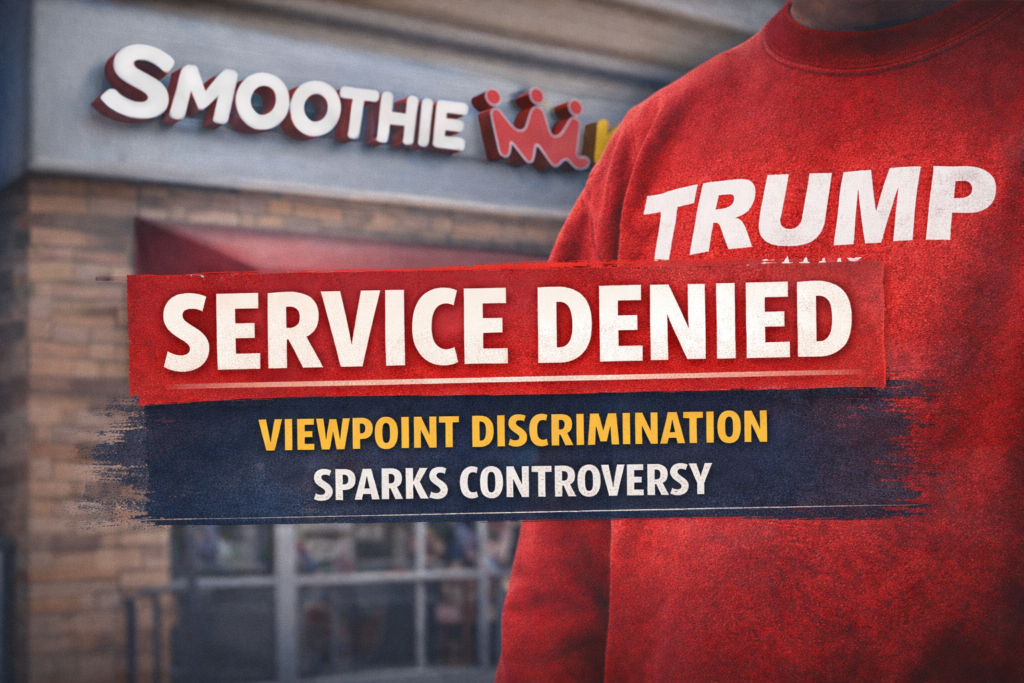
Smoothie King and the Slippery Slope of Viewpoint-Based Service

Summary: Smoothie King Employee Made Service Conditional Over Partisan Ideology  A recent incident at a Smoothie King franchise in Michigan has drawn significant attention online. But beyond the viral video and predictable partisan reactions, the in-person debacle raises a broader cultural question that deserves careful consideration. According to footage circulated on social media, a couple entered the Ann Arbor location and the husband was wearing a sweatshirt that openly supports President Trump. Employees reportedly objected to the supportive, non-vulgar message on the sweatshirt and refused service. One employee, identified later online from the video as Janiyah Williams, told the man, “we don’t support that [sweatshirt], our company is not about that, we’re not really comfortable with that.” After the customer responded, she added, “Ok well then you can have a good day because we have the right to refuse service.” The couple asserted that she was discriminating against them as customers and said they would leave. When he asked for her name, she replied, “we’re not serving Trump supporters. Have a good day.” Another employee in the video can be heard saying, “Trump discriminates against us,” to which the couple responded, “What does that have anything to do with us wanting a smoothie?” Williams then said, “supporting Trump is embarrassing,” and reiterated, “we have the right to refuse service here and that’s what we did.” At no point in the video was the couple demonstrating any threatening behavior, harassment, or disruption. The refusal appears to have been based on the disagreement with the acceptable political viewpoint expressed by the customer. That decision — not the customer’s conduct — appears to have sparked this entire controversy. In the aftermath of the viral moment, a GoFundMe page titled, “Support for Safety After Online Harassment” was launched by the employee with a description image that stated,  “teen filmed without consent faces online threats’ funds will secure safety, legal aid.” The fundraiser portrays the employee as a victim of backlash stemming from the viral footage. No one should face threats. Harassment and intimidation are wrong. Full stop. But it is equally important to acknowledge that the public reaction did not emerge out of thin air. The controversy began when an employee, while on duty and representing a national brand, made an explicit ideological determination that “we’re not serving Trump supporters” upon seeing a paying customers sweatshirt. Smoothie King’s Stated Values Smoothie King publicly promotes corporate principles such as: “Do the Right Thing” “We Are Better Together” A commitment to serving and strengthening communities These are admirable values — they reflect the kind of stability and community-minded posture most Americans expect from national brands. However, the reported actions at the Ann Arbor franchise appear difficult to reconcile with those very commitments. If “doing the right thing” includes fair and consistent treatment of customers, then refusing service over lawful political expression strains that promise. If being “better together” reflects a belief that communities function best when citizens of differing views share common spaces peacefully, then excluding someone solely over appropriate political apparel undermines that principle. Corporate values are not meaningful if they apply only when convenient. The values of any company only carry weight when applied consistently — even when disagreement may become present. Conduct vs. Viewpoint Businesses have every right to maintain order. If a customer is disruptive, aggressive, or interfering with operations, management can and should respond. Civil standards require it. But quiet expression, such as wearing a shirt with a political message is far different from misconduct. When service is denied, not because of behavior, but because of viewpoint, the standard shifts from enforcing rules to enforcing ideological preferences. That shift may seem small in a single incident, but culturally it is significant. If the operative question becomes, “Do we agree with what you believe?” rather than “Are you behaving appropriately?” then everyday commerce begins to take on a new character — one shaped by ideological approval rather than neutral standards. The Cultural Norm That Is at Risk The First Amendment restrains government power, not private businesses. That legal line is clear. But a free society depends on more than constitutional text; it depends on shared cultural norms. For generations, Americans have understood that ordinary commerce operates as neutral ground. Citizens with deeply different political views could walk into the same store, order food at the same counter, and conduct business without being subjected to an ideological test. That norm has been a quiet stabilizing force in American life. When a business signals that service may hinge on political agreement, that norm begins to erode. And erosion rarely happens all at once, rather it happens incrementally, incident by incident, until what was once unthinkable becomes routine. The long-term consequences are not abstract: Customers begin to conceal their views to avoid conflict. Employees feel empowered to act as arbiters of acceptable opinion. Businesses become extensions of political confrontation. Communities retreat further into ideological enclaves. That trajectory does not strengthen civic life — it weakens it. Equal Standards Protect Everyone The New Tolerance Campaign does not evaluate this situation based on the specific political message involved. The principle is either neutral or it is not. If a customer wearing progressive advocacy apparel were denied service solely because employees objected to the message, the concern would be the same. If a conservative customer were refused service for a lawful slogan, the standard would not change. Equal standards must apply regardless of personal viewpoint. Once a society accepts that lawful beliefs can justify exclusion from routine commerce, the protection becomes unstable. The precedent established against one viewpoint today can be applied against another tomorrow. Neutral standards protect everyone. Selective standards protect no one for long. An Opportunity for Leadership The incident in Ann Arbor presents an opportunity for Smoothie King leadership and franchise ownership to clarify their policies and reaffirm their principles. There is a straightforward path forward: Clarify that service standards are based on conduct, not viewpoint. Distinguish clearly between disruptive behavior and lawful expression.

Blog

Viewpoint Intolerance is a Continuing Pandemic in 2026

When Debate Becomes Unwelcome: The Erosion of Free Expression on American Campuses Late in February 2026, what should have been a routine academic lecture at the University of California, Los Angeles (UCLA), became yet another symbol of a troubling trend in American higher education. Bari Weiss, editor-in-chief of CBS News and a prominent voice in national journalism, was invited to deliver a prestigious lecture at UCLA’s Daniel Pearl Memorial Lecture series about “The Future of Journalism.” Instead, she ultimately withdrew, not due to lacking interest or irrelevance, but because of mounting pressure and threats related to her impending appearance. Campus Pressure And Intimidation Reports indicate that a petition against the event amassed thousands of signatures, and activist groups, including Code Pink, actively campaigned for UCLA to rescind the invitation. Meanwhile, a faculty figure allegedly threatened to resign if the lecture proceeded — a sign that opposition wasn’t limited to students but ran into institutional leadership as well. While UCLA officials claim the event was canceled due to “security concerns,” the bigger picture is unmistakable: a chorus of ideological pressure forced a public speaker to retreat — a chilling victory for viewpoint intolerance. Leadership and the Hypocrisy of Intolerance What makes this episode even more troubling is the reported reaction from within UCLA’s own leadership structure. According to recent reporting, Margaret Peters, the Associate Director of UCLA’s Burkle Center for International Relations, objected so strongly to Bari Weiss’ appearance that she threatened to resign from her leadership role if Weiss were allowed to speak, even virtually. That detail matters. Universities often defend cancellations or withdrawals by pointing to student activism or outside pressure. But in this case, resistance reportedly extended into the institutional leadership itself. When an associate director of a major academic center signals that even a virtual lecture is unacceptable, it reveals something deeper than a routine disagreement over programming. It reveals that intolerance for opposing viewpoints. The Burkle Center exists to foster discussion, international dialogue, and serious engagement with complex global issues. Leadership at such a center carries with it a responsibility to model intellectual openness. Disagreement with a speaker’s views is expected in academia. Attempting to prevent those views from being heard at all is something very different. If those entrusted with guiding academic dialogue find it intolerable for students to hear perspectives they personally oppose, that raises legitimate questions. How can a center dedicated to international relations and open inquiry function properly if its leadership signals that certain viewpoints are beyond the pale? The irony is difficult to ignore. The very institution charged with expanding discourse appears unwilling to tolerate it. Universities cannot champion intellectual diversity in mission statements while resisting it in practice. When leadership itself becomes a gatekeeper against ideological disagreement, the problem is no longer student activism alone. It becomes structural and structural intolerance is far more concerning than any single protest. Viewpoint Intolerance is an Ongoing Threat In 2026, America faces numerous challenges, but one that strikes at the core of our constitutional republic is the refusal to engage with diverse ideas. Universities, once thought to be bastions of debate, too often become echo chambers where only certain perspectives are permitted without protest or intimidation. When student activists and faculty members exercise their right to protest, that’s part of a healthy civic fabric. But when that pressure escalates to cancellation of scheduled discussions, public institutions are left making impossible choices: either uphold free expression or placate the loudest voices. It’s a false and dangerous choice, and it’s one that chips away at the free marketplace of ideas. Why It Matters American universities are meant to be training grounds for thoughtful citizens, future leaders, and informed voters. If institutions begin to decline hosting viewpoints they find “uncomfortable,” we cosign our students to ideological silos rather than the intellectually rigorous environments they deserve. The cancellation of Bari Weiss’ lecture over security is more than an isolated controversy. It’s a symptom of a broader ongoing pandemic of viewpoint intolerance in our country. We reject the notion that certain ideas must be excluded from public discourse simply because they’re unpopular or provoke discomfort. Free expression isn’t a convenience; it’s a constitutional foundation and a fundamental societal good.

Blog

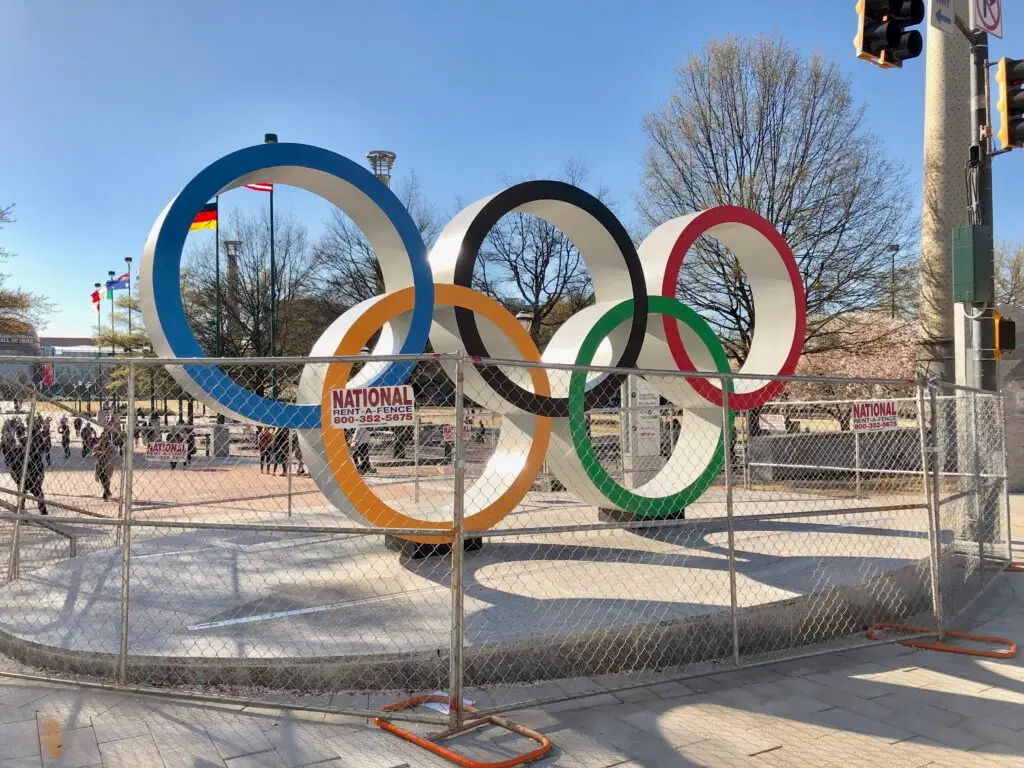
When the Flag Becomes a Backdrop: Olympic Representation and the Tolerance Double Standard

Every four years, Americans pause their divisions and rally around something bigger than politics. We gather as one unified nation to watch athletes walk into a stadium draped in red, white, and blue. We cheer when the Stars and Stripes rise above the podium. We teach our children that wearing “USA” across your chest is an honor. And yet, in recent Olympic cycles, we’ve witnessed a recurring phenomenon: athletes competing under the American flag publicly disparaging the very country they represent — sometimes from the Olympic stage itself. From our perspective, this conversation is not about silencing speech. It is about exposing a growing cultural double standard, one that celebrates certain forms of dissent while stigmatizing expressions of patriotic pride. A Growing Pattern Over the past several years, a number of Team USA athletes have used Olympic-related moments to criticize America in sweeping terms. Gwen Berry turned away from the American flag during the national anthem at the 2021 U.S. Olympic Trials medal ceremony, later describing the anthem as “disrespectful.” Members of the U.S. Women’s National Team, including Megan Rapinoe, have knelt during the anthem and repeatedly characterized America as structurally oppressive while competing internationally. To navigate Rule 50, which prohibits any form of “demonstration, political, religious, or racial propaganda in any Olympic sites, venues, or other areas,” some athletes have shifted their commentary to sanctioned press conferences or media interviews. For example, Winter Olympic freestyle skier Hunter Hess used post-event media appearances to characterize the United States as fundamentally unjust, even while benefiting from the constitutional freedoms, institutional support, and economic opportunities that uniquely enable American athletes to compete on the global stage. To be clear: these athletes have the constitutional right to speak their mind. The First Amendment protects their speech. That is not in dispute, but rights do not eliminate responsibilities and positive representation carries weight. The Question Few Will Ask Here is the tension that mainstream institutions rarely address: Why is criticism of America on the world stage frequently praised as ‘brave’ while unapologetic expressions of national pride are often labeled extreme, exclusionary, or dangerous? That asymmetry is not tolerance — it is selective validation. In today’s environment: Public denunciations of America are framed as ‘moral courage.’ Open celebration of American exceptionalism is treated with suspicion. Sponsors and governing bodies remain largely silent when athletes disparage the nation. Meanwhile, overtly patriotic speech is often scrutinized or marginalized. If tolerance is the standard, it must apply across the board! The Olympic Platform Is Not A Personal Stage The Olympic Games are not merely a collection of individual performances, rather they are structured around national representation. Athletes march behind their country’s flag, they wear uniforms bearing their nation’s name and they stand beneath that flag during medal ceremonies. This symbolism is not accidental — it is foundational to the Games. Competing in the Olympics is an extraordinary personal achievement, but it is also an act of civic representation. The uniform is not a personal brand extension, the winners podium is not a campaign rally, and the American flag is not a prop. Representation does not require blind allegiance and it does not demand silence about policy disagreements, however, it does invite a measure of humility and respect for the millions of Americans whose identity is bound up in those symbols. America is the country that: Protects the right to dissent without imprisonment. Provides the economic and sponsorship ecosystem that makes elite sports possible. Guarantees the freedoms that allow athletes to criticize it in the first place. There is a profound irony in condemning America from a platform made possible by its constitutional protections. The Cultural Incentive Structure Why does this pattern persist? Because there is little to no institutional cost. When anti-American rhetoric is expressed in or around the Olympics: Media outlets always amplify and defend it. Corporate sponsors continue their support without constraint or withdrawal. Cultural institutions applaud the behavior and describe it as necessary social commentary. But just imagine the reverse. Imagine an athlete unapologetically praising America’s founding ideals without qualification. Imagine a competitor using the podium to celebrate American exceptionalism or criticize radical progressive orthodoxy. Would that athlete be met with equal celebration? Or would investigations, sponsorship pressure, and reputational backlash quickly follow? We do not seek to punish dissent, rather we simply seek consistency. If protest is noble, it must be noble across viewpoints. If patriotism is suspect, then anti-patriotism must also face scrutiny. If tolerance is real, it must extend in every direction. Unity Is Not Oppression The Olympics remain one of the last shared civic rituals in American life. For a brief moment, politically partisan divisions recede. Americans who disagree on policy, culture, and ideology still unite in support of their country’s athletes. The American flag is not a partisan emblem. The national anthem is not a political slogan. The Olympic uniform is not an ideological statement. Criticism of public policy is a healthy part of democracy. But contempt for the nation itself, broadcast globally while standing under its banner, undermines the civic cohesion that pluralism depends upon. We believe in accountability, fairness, and equal standards. When institutions amplify narratives that erode national unity while marginalizing those who affirm it — that is not neutrality — it is cultural engineering. A Moment Of Reflection Before The Torch Goes Out The Olympic Games are meant to inspire excellence, unity, and national pride. They are one of the few world stages where Americans, of every background, stand together and cheer for the same flag. That unity is unbelievably fragile these days. Athletes who earn the privilege of representing the United States of America are not required to abandon their convictions. These gifted professional athletes should recognize the gravity of the uniform they wear and the flag that rises behind them. Proud representation of our nation is not just personal achievement, but it is national symbolism as well. As the Olympic closing ceremonies approach this Sunday, there is still time for reflection. There is

Blog

The Grammy Awards’ Annual Sermon on “Tolerance” With All The Usual Exceptions

Once again, the Grammys proved they are no longer primarily a celebration of music, creativity, or artistic excellence. They are an annual morality play — one in which celebrities lecture Americans about tolerance, compassion, and justice, while practicing none of it themselves. Last night’s broadcast followed a script that has become painfully familiar over the years: applause for radical rhetoric, scorn for law enforcement, and a complete absence of self-reflection. Viewers were told who to hate, what to believe, and which institutions are acceptable targets for profanity, all under the banner of “love” and “inclusion.” Tolerance, As Long As You Think the Same Thing At the Grammys, tolerance does not mean pluralism, it means compliance. Artists are no longer celebrated solely for their hard work, but for their willingness to echo the carefully contrived political slogans. Those who dissent or question otherwise, are treated as moral threats rather than fellow citizens. Diversity is endlessly praised, except when it comes to ideas. This is not inclusion, rather it’s ideological orthodoxy enforced by public applause. Billie Eilish and the Luxury of Cost-Free Radicalism After winning Song of the Year, Billie Eilish used her moment on stage to declare: “No one is illegal on stolen land… we need to keep fighting and speaking up and protesting… our voices really do matter and the people matter and f* ICE**.”   The crowd erupted. What the crowd did not hear was any acknowledgment of the contradiction embedded in her message. Eilish reportedly owns a $2.3 million equestrian ranch in Glendale, California—land that, for thousands of years prior to Spanish colonization, was inhabited by the Gabrielino-Tongva people. If land ownership itself delegitimizes law and borders, that principle is being applied quite selectively. Celebrities are never asked to surrender their own property, wealth, or security in service of the slogans they demand others live by. This is the defining feature of elite activism: weaponize radical language against the American people with zero personal cost. Bad Bunny, ICE, and the Erasure of the American Audience After winning Best Música Urbana Album, Bad Bunny opened his remarks with: “Before I say thanks to God, I’m going to say ICE out.” The cheers were immediate. Later in the night, the Recording Academy elevated him even further, awarding Album of the Year to “Debí Tirar Más Fotos,” making him the first artist to win the Grammys’ top prize for a Spanish-language album. Recognition of talent is not the issue, but the double standard is. At the end of the night, Bad Bunny delivered his acceptance remarks almost entirely in Spanish on an American broadcast, despite this being a U.S.-based awards show aimed primarily at an American audience. This comes even as a separate Latin Grammy Awards, presented by the Latin Recording Academy, has existed since 2000 to celebrate Spanish-language music. More revealing still: Bad Bunny’s most recent “world tour” skipped the United States entirely, reportedly out of fear that ICE might be present at his concerts. Yet American institutions continue to celebrate him, including selecting him to perform at the NFL Super Bowl halftime show this Sunday. In other words: America is too dangerous to tour American law enforcement gets vilified on stage American platforms (The Recording Academy’s Grammy Awards and the NFL’s Super Bowl)  still provide the biggest stages imaginable This is selective dependence on the very country being targeted and condemned. Hypocrisy as a Feature, Not a Bug The same celebrities who condemn “hate” are often the first to engage in it… so long as the target is politically acceptable. Mocking religious beliefs? Applauded.Demonizing half the country? Standing ovation.Dehumanizing parents, conservatives, or skeptics? Get labeled “brave” and get awarded with a Grammy. Meanwhile, calls for civility only emerge when the criticism runs the other direction. And as you know by now, that’s not moral clarity… it’s selective outrage. Throughout the Grammy Awards, attacks on ICE were not framed as policy disagreements and not one single celebrity other than Jelly Roll was willing to use their acceptance speech time to turn down the divisive temperature across our country or give all the glory to God. ICE, the U.S. Immigration and Customs Enforcement agency, exists to enforce federal law, including the removal of individuals who are in the country illegally and often after committing additional crimes. Deportation does not automatically preclude lawful reentry in the future, yet the agency is treated as inherently evil by celebrities who live far removed from communities that reel from the consequences of unchecked illegal immigration every day. This alone is selective outrage dressed up as virtue. SZA, Faith, and the Need for Facts After winning Record of the Year alongside Kendrick Lamar for “Luther,” SZA gave a thoughtful, mostly unifying speech. One line, however, deserves slight correction: “We are not governed by the government; we’re governed by God.” As people of faith, many Americans understand the sentiment. But factually—and constitutionally—Americans are governed by civil authority. Faith informs conscience; it does not replace the rule of law. Correcting the record is not an attack. It is accountability—something the Grammys demand of ordinary Americans but rarely apply to their own speakers. Kehlani and the Applause Line Kehlani won her first Grammy last night and largely followed the same script that played out repeatedly throughout the night: “Together, we’re stronger in numbers to speak out against all the injustice going on in the world right now… I’m going to leave it at that and say, f* ICE**.” No specifics. No nuance. No acknowledgment of complexity. Just profanity met with applause. This is not courageous speech. It is chanting, which had been rewarded consistently over the course of the 3 hour Award Show program precisely because it requires no explanation and no responsibility. Activism Without Consequences Hollywood activism is always loud and always “safe.” The Grammys platform radical rhetoric with zero cost to the speakers, while working-class Americans absorb the consequences of policies these same elites cheer from the stage. There’s no accountability, no self-reflection, and no willingness

Blog

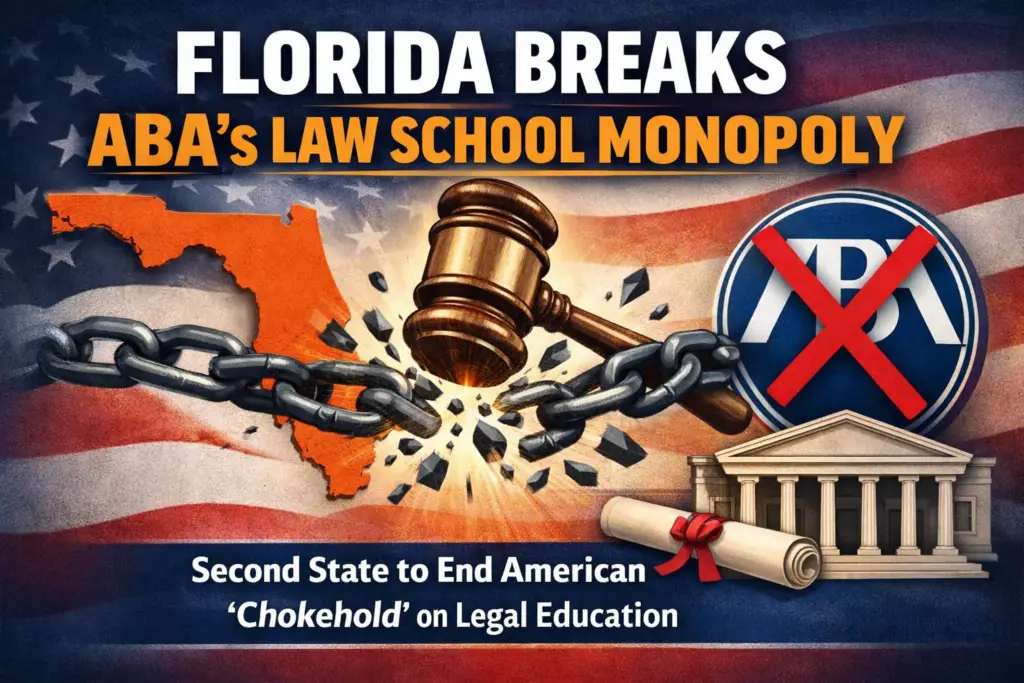
Following Texas, Florida Breaks the ABA Monopoly on Law Schools

Florida has become just the second state in the nation to break the monopoly the American Bar Association (ABA) has long held over legal education and professional credentialing. The move marks a significant step toward restoring competition, viewpoint neutrality, and accountability in a profession that depends on public trust. It also confirms what we have been warning about for awhile: the ABA has drifted far from its role as a professional trade association and instead positioned itself as a national ideological regulator. That is precisely why the ABA received one of our 2025 Worst of the Woke Awards. A Trade Group Turned Ideological Gatekeeper For decades, the ABA has exercised extraordinary power by controlling law-school accreditation, a gate that determines who may sit for bar exams, practice law, and advance professionally. In theory, accreditation should focus on competence, ethics, and access to justice. In practice, the ABA has used that authority to enforce ideological conformity. In recent years, the organization has continued conditioning accreditation and professional standing on mandatory Diversity, Equity, and Inclusion (DEI) requirements, including identity-based training, reporting mandates, and policy benchmarks unrelated to legal skill or ethical conduct. Law schools and attorneys who question or resist these frameworks face real consequences from accreditation risk to reputational damage. This is not tolerance, it’s coercion. By embedding political ideology into credentialing, the ABA has transformed “inclusion” into a loyalty test, chilling open debate in a field that should prize viewpoint neutrality and equal treatment under the law. Why the ABA Earned Our 2025 “Worst of the Woke” Award We awarded the ABA one of our 2025 Worst of the Woke Awards for this longstanding and historic behavior. In early 2025, the ABA’s diversity-focused accreditation requirement—Standard 206— was temporarily suspended under political pressure from President Trump’s executive action and after a direct letter from Attorney General Pam Bondi urging its removal, reflecting concerns that the rule unlawfully conditioned accreditation on diversity metrics rather than competence. After the suspension, the ABA responded by sending letters defending its position and asserting its commitment to access and diversity even as it reviewed the standard’ the organization also pursued legal action against the Department of Justice (DOJ) related to funding cuts, illustrating how deeply it was willing to fight to maintain its ideological approach. When the nation’s most influential legal body substitutes ideology for impartial standards, public confidence in the justice system erodes. Lawyers should be evaluated on their competence and ethics, not their willingness to comply with shifting political doctrines. The ABA’s actions undermine equal justice by privileging ideology over merit and by punishing dissent rather than encouraging rigorous debate. That is not progress; it is institutional capture. Florida Pushed Back Following Texas’ lead, Florida’s decision to loosen the ABA’s grip on legal education represents a meaningful course correction. By opening the door to alternative accreditation pathways and reducing reliance on a single, politically captured authority, Florida is reaffirming a basic principle: no private organization should wield unchecked power over an entire profession, especially one as central to constitutional governance as the law. This reform does not weaken legal standards, however, it strengthens them by restoring competition, accountability, and a focus on core professional values. A Model for Other States Florida’s move should serve as a model for other states willing to question entrenched systems that no longer serve the public interest. Breaking monopolies, especially ideological ones, is not a radical idea or action in the year of 2026. This process is necessary when institutions abandon neutrality and use their authority to impose conformity. The New Tolerance Campaign will continue documenting, writing about, and exposing cases where powerful organizations weaponize credentialing, culture, and compliance to silence dissent and narrow acceptable thought. Florida’s action is proof that reform is possible—and that tolerance can be restored when coercion is confronted.

Blog

“Landman” on Paramount+ Cracked Hollywood’s Pronoun Orthodoxy

For years, Hollywood has treated pronouns not as a matter of language, but as an ideological loyalty test. Scripts were rewritten, characters contorted, and entire storylines bent to affirm a worldview that insisted biology was optional and words were infinitely malleable. Viewers were told to suspend disbelief, not for dragons or space travel, but for the denial of biological reality. And then something interesting happened. In Landman, Paramount+ quietly aired a series that includes two unvarnished moments — played straight, without lectures or winks — that collapse the modern pronouns argument under the weight of real life. No speeches. No sermons. No culture-war monologues. Just reality doing what it always does when ideology meets the real world. Reality, Not Rhetoric Unlike the carefully curated worlds where pronoun ideology typically thrives, corporate offices, college campuses, or scripted HR scenarios, Landman is set in an unforgiving environment: West Texas oilfields, where physical labor, danger, and competence determine outcomes. Scene One: Ainsley Meets Paigyn In one of the scenes now circulating online, Ainsley Norris meets her new roommate, Paigyn, who is from Minneapolis and immediately lays out a list of expectations for the shared dorm room. Paigyn uses “they/them” pronouns, objects to Ainsley eating meat in the room or wearing animal products, dislikes music because “they” view the dorm as “their” safe space, and presents as intensely health-conscious—going so far as to oppose the use of an air freshener because it is a “toxic airborne petrochemical that they would be breathing into their lungs.” After outlining these boundaries, Paigyn asks Ainsley what her preferred pronouns are. Ainsley responds plainly: “I think that’s pretty clear.” The exchange then turns to the broader pronouns debate, with Ainsley explaining her confusion: “I’ve always been curious why they/them, because there is just one of you, and those are plural pronouns. I just never understood the hoopla of pronouns. My name is Ainsley and I just can’t really come up with a reason why you would address me in third person in a conversation that I’m a part of. So if you do, I’m probably not there, so I wouldn’t even really know what pronouns you are using anyways—so why does it matter?” Scene Two: Ainsley with the College Counselor Following her interaction with Paigyn, Ainsley visits her college counselor to explain why their personalities aren’t meshing and why the living arrangement may not be workable. Rather than approaching the situation neutrally, the counselor quickly sides with Paigyn, challenging Ainsley on whether she believes a dorm room should function as a “safe space.” When Ainsley raises her concern about pronouns, arguing that their use is not proper according to the English language, the counselor responds dismissively: “Here we go… I’m just preparing myself to be offended.” The counselor then shuts down the discussion entirely, stating: “Ainsley, I am not going to argue the evolving nature [of] pronoun usage with you. ‘They’ would prefer you use the ‘they/them’ pronoun. Why is that an issue for you?” Why These Scenes Matter The modern pronouns movement depends on artificial environments, places where consequences are muted, physical differences are ignored, and dissent is socially or professionally punished. Remove those conditions, and the entire framework collapses. Landman doesn’t play along. It shows what happens when people work dangerous jobs, face real risks, and live in environments where truth is not a social construct. In those moments, the pronouns framework doesn’t just feel wrong, it is completely irrelevant. Why This Matters for Hollywood Hollywood’s cultural power has always rested on storytelling. For the last decade, much of that storytelling has been hijacked by ideological activism, often at the expense of coherence, realism, and audience trust. Viewers noticed and ratings followed. Landman signals something different: a return to story first, truth before trend, and character over catechism. This isn’t about cruelty or exclusion. It’s about clarity: Biological reality isn’t bigotry; it’s the baseline for explaining the world. Equal opportunity doesn’t mean pretending differences don’t exist; it means fairness within reality, not fantasy. Tolerance doesn’t require enforced speech or compelled belief. Is ‘Wokeism’ Losing Its Grip on Hollywood? One show doesn’t end an era, but cultural shifts always begin with cracks. When a mainstream series stops bending the knee to ideological demands and starts trusting audiences again, the spell breaks. Studios are learning what the public has known for years: People don’t want to be politically lectured. Viewers want story lines that make sense. Enjoyers want characters who feel human. The vast majority of Americans want reality, not reeducation. Landman doesn’t market itself as anti-woke because it doesn’t need to. By simply telling a grounded story rooted in the real world, it exposes how fragile the pronouns orthodoxy actually is. The New Tolerance Standard True tolerance doesn’t require everyone to repeat the same script. It allows disagreement, it respects reality and it trusts people to see the world as it is, not as activists insist it must be. If Hollywood is finally rediscovering that lesson — one scene at a time — that’s not a culture-war victory. It’s a cultural course correction and it’s long overdue!

Scroll to Top