Blog

NTC Blog Posts

Blog

When the Flag Becomes a Backdrop: Olympic Representation and the Tolerance Double Standard

Every four years, Americans pause their divisions and rally around something bigger than politics. We gather as one unified nation to watch athletes walk into a stadium draped in red, white, and blue. We cheer when the Stars and Stripes rise above the podium. We teach our children that wearing “USA” across your chest is an honor. And yet, in recent Olympic cycles, we’ve witnessed a recurring phenomenon: athletes competing under the American flag publicly disparaging the very country they represent — sometimes from the Olympic stage itself. From our perspective, this conversation is not about silencing speech. It is about exposing a growing cultural double standard, one that celebrates certain forms of dissent while stigmatizing expressions of patriotic pride. A Growing Pattern Over the past several years, a number of Team USA athletes have used Olympic-related moments to criticize America in sweeping terms. Gwen Berry turned away from the American flag during the national anthem at the 2021 U.S. Olympic Trials medal ceremony, later describing the anthem as “disrespectful.” Members of the U.S. Women’s National Team, including Megan Rapinoe, have knelt during the anthem and repeatedly characterized America as structurally oppressive while competing internationally. To navigate Rule 50, which prohibits any form of “demonstration, political, religious, or racial propaganda in any Olympic sites, venues, or other areas,” some athletes have shifted their commentary to sanctioned press conferences or media interviews. For example, Winter Olympic freestyle skier Hunter Hess used post-event media appearances to characterize the United States as fundamentally unjust, even while benefiting from the constitutional freedoms, institutional support, and economic opportunities that uniquely enable American athletes to compete on the global stage. To be clear: these athletes have the constitutional right to speak their mind. The First Amendment protects their speech. That is not in dispute, but rights do not eliminate responsibilities and positive representation carries weight. The Question Few Will Ask Here is the tension that mainstream institutions rarely address: Why is criticism of America on the world stage frequently praised as ‘brave’ while unapologetic expressions of national pride are often labeled extreme, exclusionary, or dangerous? That asymmetry is not tolerance — it is selective validation. In today’s environment: Public denunciations of America are framed as ‘moral courage.’ Open celebration of American exceptionalism is treated with suspicion. Sponsors and governing bodies remain largely silent when athletes disparage the nation. Meanwhile, overtly patriotic speech is often scrutinized or marginalized. If tolerance is the standard, it must apply across the board! The Olympic Platform Is Not A Personal Stage The Olympic Games are not merely a collection of individual performances, rather they are structured around national representation. Athletes march behind their country’s flag, they wear uniforms bearing their nation’s name and they stand beneath that flag during medal ceremonies. This symbolism is not accidental — it is foundational to the Games. Competing in the Olympics is an extraordinary personal achievement, but it is also an act of civic representation. The uniform is not a personal brand extension, the winners podium is not a campaign rally, and the American flag is not a prop. Representation does not require blind allegiance and it does not demand silence about policy disagreements, however, it does invite a measure of humility and respect for the millions of Americans whose identity is bound up in those symbols. America is the country that: Protects the right to dissent without imprisonment. Provides the economic and sponsorship ecosystem that makes elite sports possible. Guarantees the freedoms that allow athletes to criticize it in the first place. There is a profound irony in condemning America from a platform made possible by its constitutional protections. The Cultural Incentive Structure Why does this pattern persist? Because there is little to no institutional cost. When anti-American rhetoric is expressed in or around the Olympics: Media outlets always amplify and defend it. Corporate sponsors continue their support without constraint or withdrawal. Cultural institutions applaud the behavior and describe it as necessary social commentary. But just imagine the reverse. Imagine an athlete unapologetically praising America’s founding ideals without qualification. Imagine a competitor using the podium to celebrate American exceptionalism or criticize radical progressive orthodoxy. Would that athlete be met with equal celebration? Or would investigations, sponsorship pressure, and reputational backlash quickly follow? We do not seek to punish dissent, rather we simply seek consistency. If protest is noble, it must be noble across viewpoints. If patriotism is suspect, then anti-patriotism must also face scrutiny. If tolerance is real, it must extend in every direction. Unity Is Not Oppression The Olympics remain one of the last shared civic rituals in American life. For a brief moment, politically partisan divisions recede. Americans who disagree on policy, culture, and ideology still unite in support of their country’s athletes. The American flag is not a partisan emblem. The national anthem is not a political slogan. The Olympic uniform is not an ideological statement. Criticism of public policy is a healthy part of democracy. But contempt for the nation itself, broadcast globally while standing under its banner, undermines the civic cohesion that pluralism depends upon. We believe in accountability, fairness, and equal standards. When institutions amplify narratives that erode national unity while marginalizing those who affirm it — that is not neutrality — it is cultural engineering. A Moment Of Reflection Before The Torch Goes Out The Olympic Games are meant to inspire excellence, unity, and national pride. They are one of the few world stages where Americans, of every background, stand together and cheer for the same flag. That unity is unbelievably fragile these days. Athletes who earn the privilege of representing the United States of America are not required to abandon their convictions. These gifted professional athletes should recognize the gravity of the uniform they wear and the flag that rises behind them. Proud representation of our nation is not just personal achievement, but it is national symbolism as well. As the Olympic closing ceremonies approach this Sunday, there is still time for reflection. There is

Blog

The Grammy Awards’ Annual Sermon on “Tolerance” With All The Usual Exceptions

Once again, the Grammys proved they are no longer primarily a celebration of music, creativity, or artistic excellence. They are an annual morality play — one in which celebrities lecture Americans about tolerance, compassion, and justice, while practicing none of it themselves. Last night’s broadcast followed a script that has become painfully familiar over the years: applause for radical rhetoric, scorn for law enforcement, and a complete absence of self-reflection. Viewers were told who to hate, what to believe, and which institutions are acceptable targets for profanity, all under the banner of “love” and “inclusion.” Tolerance, As Long As You Think the Same Thing At the Grammys, tolerance does not mean pluralism, it means compliance. Artists are no longer celebrated solely for their hard work, but for their willingness to echo the carefully contrived political slogans. Those who dissent or question otherwise, are treated as moral threats rather than fellow citizens. Diversity is endlessly praised, except when it comes to ideas. This is not inclusion, rather it’s ideological orthodoxy enforced by public applause. Billie Eilish and the Luxury of Cost-Free Radicalism After winning Song of the Year, Billie Eilish used her moment on stage to declare: “No one is illegal on stolen land… we need to keep fighting and speaking up and protesting… our voices really do matter and the people matter and f* ICE**.”   The crowd erupted. What the crowd did not hear was any acknowledgment of the contradiction embedded in her message. Eilish reportedly owns a $2.3 million equestrian ranch in Glendale, California—land that, for thousands of years prior to Spanish colonization, was inhabited by the Gabrielino-Tongva people. If land ownership itself delegitimizes law and borders, that principle is being applied quite selectively. Celebrities are never asked to surrender their own property, wealth, or security in service of the slogans they demand others live by. This is the defining feature of elite activism: weaponize radical language against the American people with zero personal cost. Bad Bunny, ICE, and the Erasure of the American Audience After winning Best Música Urbana Album, Bad Bunny opened his remarks with: “Before I say thanks to God, I’m going to say ICE out.” The cheers were immediate. Later in the night, the Recording Academy elevated him even further, awarding Album of the Year to “Debí Tirar Más Fotos,” making him the first artist to win the Grammys’ top prize for a Spanish-language album. Recognition of talent is not the issue, but the double standard is. At the end of the night, Bad Bunny delivered his acceptance remarks almost entirely in Spanish on an American broadcast, despite this being a U.S.-based awards show aimed primarily at an American audience. This comes even as a separate Latin Grammy Awards, presented by the Latin Recording Academy, has existed since 2000 to celebrate Spanish-language music. More revealing still: Bad Bunny’s most recent “world tour” skipped the United States entirely, reportedly out of fear that ICE might be present at his concerts. Yet American institutions continue to celebrate him, including selecting him to perform at the NFL Super Bowl halftime show this Sunday. In other words: America is too dangerous to tour American law enforcement gets vilified on stage American platforms (The Recording Academy’s Grammy Awards and the NFL’s Super Bowl)  still provide the biggest stages imaginable This is selective dependence on the very country being targeted and condemned. Hypocrisy as a Feature, Not a Bug The same celebrities who condemn “hate” are often the first to engage in it… so long as the target is politically acceptable. Mocking religious beliefs? Applauded.Demonizing half the country? Standing ovation.Dehumanizing parents, conservatives, or skeptics? Get labeled “brave” and get awarded with a Grammy. Meanwhile, calls for civility only emerge when the criticism runs the other direction. And as you know by now, that’s not moral clarity… it’s selective outrage. Throughout the Grammy Awards, attacks on ICE were not framed as policy disagreements and not one single celebrity other than Jelly Roll was willing to use their acceptance speech time to turn down the divisive temperature across our country or give all the glory to God. ICE, the U.S. Immigration and Customs Enforcement agency, exists to enforce federal law, including the removal of individuals who are in the country illegally and often after committing additional crimes. Deportation does not automatically preclude lawful reentry in the future, yet the agency is treated as inherently evil by celebrities who live far removed from communities that reel from the consequences of unchecked illegal immigration every day. This alone is selective outrage dressed up as virtue. SZA, Faith, and the Need for Facts After winning Record of the Year alongside Kendrick Lamar for “Luther,” SZA gave a thoughtful, mostly unifying speech. One line, however, deserves slight correction: “We are not governed by the government; we’re governed by God.” As people of faith, many Americans understand the sentiment. But factually—and constitutionally—Americans are governed by civil authority. Faith informs conscience; it does not replace the rule of law. Correcting the record is not an attack. It is accountability—something the Grammys demand of ordinary Americans but rarely apply to their own speakers. Kehlani and the Applause Line Kehlani won her first Grammy last night and largely followed the same script that played out repeatedly throughout the night: “Together, we’re stronger in numbers to speak out against all the injustice going on in the world right now… I’m going to leave it at that and say, f* ICE**.” No specifics. No nuance. No acknowledgment of complexity. Just profanity met with applause. This is not courageous speech. It is chanting, which had been rewarded consistently over the course of the 3 hour Award Show program precisely because it requires no explanation and no responsibility. Activism Without Consequences Hollywood activism is always loud and always “safe.” The Grammys platform radical rhetoric with zero cost to the speakers, while working-class Americans absorb the consequences of policies these same elites cheer from the stage. There’s no accountability, no self-reflection, and no willingness

Blog

Following Texas, Florida Breaks the ABA Monopoly on Law Schools

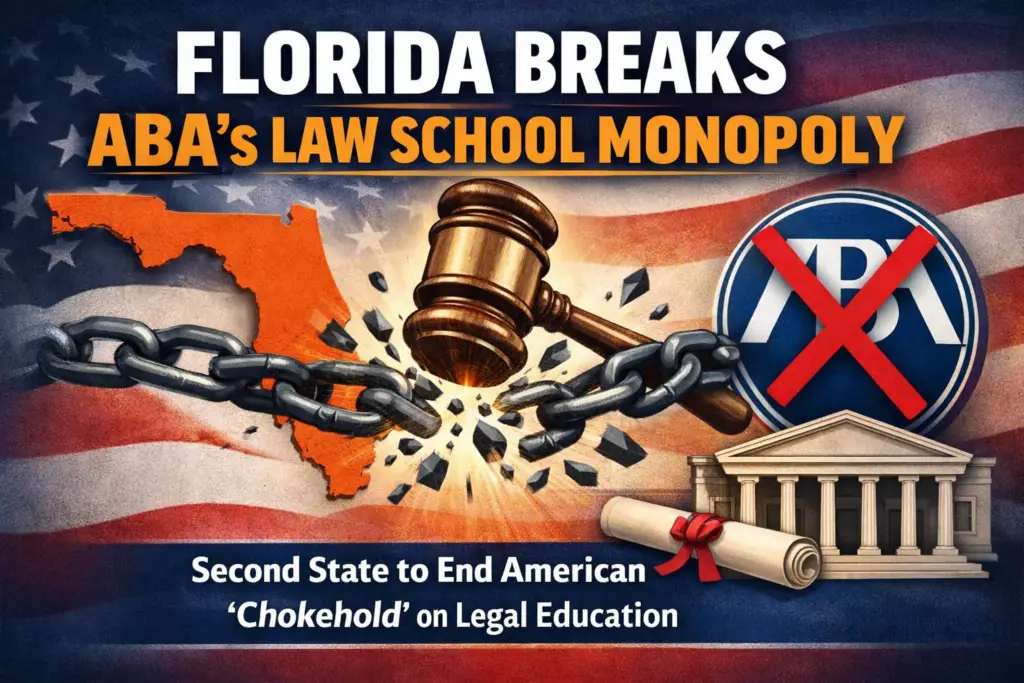
Florida has become just the second state in the nation to break the monopoly the American Bar Association (ABA) has long held over legal education and professional credentialing. The move marks a significant step toward restoring competition, viewpoint neutrality, and accountability in a profession that depends on public trust. It also confirms what we have been warning about for awhile: the ABA has drifted far from its role as a professional trade association and instead positioned itself as a national ideological regulator. That is precisely why the ABA received one of our 2025 Worst of the Woke Awards. A Trade Group Turned Ideological Gatekeeper For decades, the ABA has exercised extraordinary power by controlling law-school accreditation, a gate that determines who may sit for bar exams, practice law, and advance professionally. In theory, accreditation should focus on competence, ethics, and access to justice. In practice, the ABA has used that authority to enforce ideological conformity. In recent years, the organization has continued conditioning accreditation and professional standing on mandatory Diversity, Equity, and Inclusion (DEI) requirements, including identity-based training, reporting mandates, and policy benchmarks unrelated to legal skill or ethical conduct. Law schools and attorneys who question or resist these frameworks face real consequences from accreditation risk to reputational damage. This is not tolerance, it’s coercion. By embedding political ideology into credentialing, the ABA has transformed “inclusion” into a loyalty test, chilling open debate in a field that should prize viewpoint neutrality and equal treatment under the law. Why the ABA Earned Our 2025 “Worst of the Woke” Award We awarded the ABA one of our 2025 Worst of the Woke Awards for this longstanding and historic behavior. In early 2025, the ABA’s diversity-focused accreditation requirement—Standard 206— was temporarily suspended under political pressure from President Trump’s executive action and after a direct letter from Attorney General Pam Bondi urging its removal, reflecting concerns that the rule unlawfully conditioned accreditation on diversity metrics rather than competence. After the suspension, the ABA responded by sending letters defending its position and asserting its commitment to access and diversity even as it reviewed the standard’ the organization also pursued legal action against the Department of Justice (DOJ) related to funding cuts, illustrating how deeply it was willing to fight to maintain its ideological approach. When the nation’s most influential legal body substitutes ideology for impartial standards, public confidence in the justice system erodes. Lawyers should be evaluated on their competence and ethics, not their willingness to comply with shifting political doctrines. The ABA’s actions undermine equal justice by privileging ideology over merit and by punishing dissent rather than encouraging rigorous debate. That is not progress; it is institutional capture. Florida Pushed Back Following Texas’ lead, Florida’s decision to loosen the ABA’s grip on legal education represents a meaningful course correction. By opening the door to alternative accreditation pathways and reducing reliance on a single, politically captured authority, Florida is reaffirming a basic principle: no private organization should wield unchecked power over an entire profession, especially one as central to constitutional governance as the law. This reform does not weaken legal standards, however, it strengthens them by restoring competition, accountability, and a focus on core professional values. A Model for Other States Florida’s move should serve as a model for other states willing to question entrenched systems that no longer serve the public interest. Breaking monopolies, especially ideological ones, is not a radical idea or action in the year of 2026. This process is necessary when institutions abandon neutrality and use their authority to impose conformity. The New Tolerance Campaign will continue documenting, writing about, and exposing cases where powerful organizations weaponize credentialing, culture, and compliance to silence dissent and narrow acceptable thought. Florida’s action is proof that reform is possible—and that tolerance can be restored when coercion is confronted.

Blog

“Landman” on Paramount+ Cracked Hollywood’s Pronoun Orthodoxy

For years, Hollywood has treated pronouns not as a matter of language, but as an ideological loyalty test. Scripts were rewritten, characters contorted, and entire storylines bent to affirm a worldview that insisted biology was optional and words were infinitely malleable. Viewers were told to suspend disbelief, not for dragons or space travel, but for the denial of biological reality. And then something interesting happened. In Landman, Paramount+ quietly aired a series that includes two unvarnished moments — played straight, without lectures or winks — that collapse the modern pronouns argument under the weight of real life. No speeches. No sermons. No culture-war monologues. Just reality doing what it always does when ideology meets the real world. Reality, Not Rhetoric Unlike the carefully curated worlds where pronoun ideology typically thrives, corporate offices, college campuses, or scripted HR scenarios, Landman is set in an unforgiving environment: West Texas oilfields, where physical labor, danger, and competence determine outcomes. Scene One: Ainsley Meets Paigyn In one of the scenes now circulating online, Ainsley Norris meets her new roommate, Paigyn, who is from Minneapolis and immediately lays out a list of expectations for the shared dorm room. Paigyn uses “they/them” pronouns, objects to Ainsley eating meat in the room or wearing animal products, dislikes music because “they” view the dorm as “their” safe space, and presents as intensely health-conscious—going so far as to oppose the use of an air freshener because it is a “toxic airborne petrochemical that they would be breathing into their lungs.” After outlining these boundaries, Paigyn asks Ainsley what her preferred pronouns are. Ainsley responds plainly: “I think that’s pretty clear.” The exchange then turns to the broader pronouns debate, with Ainsley explaining her confusion: “I’ve always been curious why they/them, because there is just one of you, and those are plural pronouns. I just never understood the hoopla of pronouns. My name is Ainsley and I just can’t really come up with a reason why you would address me in third person in a conversation that I’m a part of. So if you do, I’m probably not there, so I wouldn’t even really know what pronouns you are using anyways—so why does it matter?” Scene Two: Ainsley with the College Counselor Following her interaction with Paigyn, Ainsley visits her college counselor to explain why their personalities aren’t meshing and why the living arrangement may not be workable. Rather than approaching the situation neutrally, the counselor quickly sides with Paigyn, challenging Ainsley on whether she believes a dorm room should function as a “safe space.” When Ainsley raises her concern about pronouns, arguing that their use is not proper according to the English language, the counselor responds dismissively: “Here we go… I’m just preparing myself to be offended.” The counselor then shuts down the discussion entirely, stating: “Ainsley, I am not going to argue the evolving nature [of] pronoun usage with you. ‘They’ would prefer you use the ‘they/them’ pronoun. Why is that an issue for you?” Why These Scenes Matter The modern pronouns movement depends on artificial environments, places where consequences are muted, physical differences are ignored, and dissent is socially or professionally punished. Remove those conditions, and the entire framework collapses. Landman doesn’t play along. It shows what happens when people work dangerous jobs, face real risks, and live in environments where truth is not a social construct. In those moments, the pronouns framework doesn’t just feel wrong, it is completely irrelevant. Why This Matters for Hollywood Hollywood’s cultural power has always rested on storytelling. For the last decade, much of that storytelling has been hijacked by ideological activism, often at the expense of coherence, realism, and audience trust. Viewers noticed and ratings followed. Landman signals something different: a return to story first, truth before trend, and character over catechism. This isn’t about cruelty or exclusion. It’s about clarity: Biological reality isn’t bigotry; it’s the baseline for explaining the world. Equal opportunity doesn’t mean pretending differences don’t exist; it means fairness within reality, not fantasy. Tolerance doesn’t require enforced speech or compelled belief. Is ‘Wokeism’ Losing Its Grip on Hollywood? One show doesn’t end an era, but cultural shifts always begin with cracks. When a mainstream series stops bending the knee to ideological demands and starts trusting audiences again, the spell breaks. Studios are learning what the public has known for years: People don’t want to be politically lectured. Viewers want story lines that make sense. Enjoyers want characters who feel human. The vast majority of Americans want reality, not reeducation. Landman doesn’t market itself as anti-woke because it doesn’t need to. By simply telling a grounded story rooted in the real world, it exposes how fragile the pronouns orthodoxy actually is. The New Tolerance Standard True tolerance doesn’t require everyone to repeat the same script. It allows disagreement, it respects reality and it trusts people to see the world as it is, not as activists insist it must be. If Hollywood is finally rediscovering that lesson — one scene at a time — that’s not a culture-war victory. It’s a cultural course correction and it’s long overdue!

Blog

Elon Musk Calls SPLC ‘Evil’ as FBI Drops ADL: The Reckoning for Biased Watchdog Groups Has Begun

FBI Director Kash Patel has formally ended the Bureau’s partnership with the Anti-Defamation League (ADL), calling it a political operation “masquerading” as a watchdog. It’s a decisive break from years of ADL-influenced trainings and briefings for agents, and it marks a turning point in how federal law enforcement chooses its outside “experts.” This decision didn’t happen in a vacuum. It followed mounting backlash over the ADL’s since-removed online material that smeared mainstream conservative organizations and figures — most notably the inclusion of Turning Point USA in a now-closed “extremism” glossary. Even as the ADL insists it merely offers education, the record shows a steady drift from civil-rights work to viewpoint policing. Director Patel’s action acknowledges that drift and ends the FBI’s support for it. The ADL has defended its collaboration with law enforcement and highlighted its “Law Enforcement and Society” (LEAS) programming. But that’s the point: trainings that start as neutral can morph into pipelines for selectively framed labels that end up in case files, policy memos, and media narratives. The most powerful investigative agency in the world cannot afford “outsourced bias” disguised as “expertise.” “Watchdogs” or Political Fronts? For years, self-styled “watchdogs” have claimed a monopoly on defining “hate” and “extremism.” These labels are then used to gatekeep social trust, stifle speech, and nudge public and private enforcers to punish the disfavored. That’s not accountability — it’s power without oversight. Patel’s move effectively says the FBI will no longer rent out its building or their badge to politicized third parties. He framed the break as a refusal to “partner with political fronts masquerading as watchdogs,” a standard that should apply across the board. If your “research” reads like a campaign mailer, you shouldn’t be writing the textbooks or lesson plans for federal agents. The SPLC Problem And Why It’s Boiling Over The Southern Poverty Law Center (SPLC) exemplifies the same problem: originally created in 1971 to “ensure that the promise of the civil rights movement became a reality for all,” now treats ideological disagreement as pathology. The SPLC’s notorious “hate map” has lumped mainstream groups together with fringe outfits for years; media outlets cite it uncritically; platforms and donors lean on it to justify bans and blacklists. Early this morning, Elon Musk captured the public mood bluntly: “The SPLC is an evil organization that spreads hate propaganda relentlessly. It needs to be shut down.” That assessment will offend the professional hall-monitors, but it resonates with millions who’ve seen their beliefs smeared by politicized labels and watched those labels used to chill lawful speech. Whether one agrees with Musk’s exact phrasing, the core critique stands: when self-described “watchdogs” manufacture moral panics, they don’t reduce hate, rather they cheapen the term, dull public vigilance, and push our institutions toward selective enforcement. That’s the opposite of tolerance. Why This Matters for Real Tolerance The New Tolerance Campaign exists to confront double standards. We’ve documented a pattern: powerful institutions subcontract their moral judgment to advocacy groups and self-righteous individuals that claim neutral expertise but act like political actors. The results? Bias laundering: Agencies and companies adopt outside “ratings,” then claim their hands are clean. The politics didn’t disappear, rather they’ve been outsourced. Label inflation: The more expansive the definition of “extremism,” the more normal dissenters get swept in, and the easier it becomes to marginalize them. Public mistrust: When people see the rules enforced one way for some and another way for others, they stop trusting the referees. Director Patel’s decision begins to unwind that unhealthy dynamic, at least inside the FBI. It also sets a precedent other agencies and private-sector partners should follow: no automatic deference to organizations that use “tolerance” as a partisan weapon. What Should Happen Next?  To move from a single decision to durable reform, we recommend: Transparent Vetting of Third-Party Trainers: Any nonprofit organization selected to brief or train federal agents should meet a clear, public standard: empirical rigor, transparent methods, and demonstrable impartiality. Past political advocacy — left or right — must be checked at the door, fully disclosed and weighed appropriately before moving forward. Independent Review Panels: Congress and Inspectors General should establish neutral review panels to audit government reliance on external “hate” or “extremism” designations. If a list or map is used inside government, it should be replicable, falsifiable, and insulated from partisan funding streams. Diversified Perspectives: When agencies do bring in outside voices, they should ensure ideologically diverse perspectives, so that one advocacy brand can’t define the entire field. That’s how you avoid blind spots and groupthink. Sunset Clauses for Partnerships: Formal Memorandum of Understanding with advocacy groups should expire unless re-approved after performance audits. “Set it and forget it” is how bias calcifies as policy. A Culture of First Principles: Law enforcement must anchor training to constitutional rights, statutory law, and objective criminal indicators — not to NGO glossaries that conflate speech with violence. Addressing the Obvious Pushback You’ll hear that cutting ties risks “ignoring antisemitism” or “going soft on hate.” That is a false choice. The FBI can and must investigate crimes motivated by bias without deputizing political nonprofits to define which Americans are suspect. In fact, staying neutral strengthens legitimate hate-crime enforcement by keeping it free from the taint of partisan gamesmanship. Likewise, criticism of the SPLC isn’t a denial that hate exists; it’s a rejection of cartoonish scorecards that lump tens of millions of law-abiding citizens into rhetorical proximity with true extremists. The more indiscriminate the label, the less useful it is in stopping real threats. A Win for Accountability — If We Make It One Director Patel’s decision is a needed correction. But lasting reform requires policy, not just press releases. Agencies should publish their criteria for outside partnerships. Congress should exercise oversight. And the media should stop treating advocacy branding as gospel. When “watchdogs” become biased political attack dogs, storied institutions must have the courage to take away the leash. As for the SPLC, Musk’s blast will spur headlines, but the underlying question is bigger than one post: Should any private entity hold quasi-official power to define which viewpoints are acceptable? Our answer is no because tolerance cannot be selective. Real tolerance means one rule for everyone,

Blog

Letter to Chiefs Leadership Regarding the “Free 4” Pre-Game Stunt

Wednesday, September 17, 2025 Kansas City Chiefs Executive Leadership Clark Hunt, Chairman & Chief Executive Officer Mark Donovan, President Brett Veach, General Manager Kansas City Chiefs 1 Arrowhead Drive Kansas City, MO 64129 Dear Mr. Hunt, Mr. Donovan, and Mr. Veach: On behalf of the New Tolerance Campaign and thousands of Americans who believe in fairness and responsibility, I am writing to express concern over recent displays of support for Rashee Rice by Kansas City Chiefs players, Travis Kelce and Tyquan Thornton, as well as the accompanying remarks made just one day later by Head Coach Andy Reid. Mr. Rice’s case is troubling not simply because of the reckless conduct that led to a devastating six-car crash, but because of what happened afterward. Court records and reporting confirm that Mr. Rice was racing his Lamborghini at 119 miles per hour on a Dallas highway when he caused the multi-car collision. Instead of checking on the innocent people he injured, he fled the scene on foot, leaving others to deal with the aftermath. The presiding judge, in sentencing him to five years of probation and thirty days in jail, made clear that this behavior “bothered him” and raised doubts about whether Rice was truly remorseful. Though Rice has since offered words of apology, his personal actions — running away and dodging accountability — spoke louder, especially to the victims and members of the surrounding community. Even today, Mr. Rice has failed to take responsibility in the most basic way: one of the victim’s attorneys confirmed that he has not paid the $1.1 million settlement owed to his client involved in the crash, citing lack of funds. This demonstrates that he has not even taken financial accountability for the harm he caused, compounding on the pain of those directly impacted by his careless decisions. Against this backdrop, it is alarming that at least two Chiefs players took to the field wearing “Free 4” apparel, as though the real injustice were Mr. Rice being held accountable, rather than the victims who were injured through no fault of their own. On a video call one day after this pre-game incident, Coach Reid told members of the media, “I know these guys love Rashee, and they feel for him sitting out here… I just think that those guys, they love the kid and want him to feel part of it in their own way.” Empathy for a teammate is understandable, but when paired with public displays that excuse serious misconduct, it risks sending a dangerous message — that talent and fame are a free pass from responsibility. The Kansas City Chiefs are more than a football team. You are a cultural institution with millions of fans, many of them young people who look to your players and organization as role models. The message they absorb matters. Do we want them to learn that accountability and responsibility come first, or that reckless behavior can be brushed aside if you wear the right jersey for a successful team? We respectfully urge the Chiefs to demonstrate real leadership by discouraging fans and banning players from displaying any “Free 4” material for the remainder of Rice’s suspension. We would also appreciate seeing a clear statement of support for the victims of this crash and encouraging Mr. Rice to take meaningful restorative actions that go beyond the bare minimum required by law. Such steps would quickly reaffirm that the Kansas City Chiefs stand for integrity, not excuses, and that no one — no matter how talented — is above accountability. The legacy of your franchise is built not only on victories but also on the respect of your stated values: “Win with Character, Unite our Community, Inspire our Fans, and Honor Tradition.” This is a moment to show that the Chiefs’ commitment to character is as strong as their commitment to winning another NFL championship. Sincerely, Chad A. Banghart President New Tolerance Campaign   P.S. It is worth underscoring that the New Tolerance Campaign has publicly supported members of your organization before. When your starting kicker Harrison Butker was attacked for delivering a commencement speech rooted in his Catholic faith, we stood with him and defended his right to express his beliefs without intimidation or censorship. Our commitment is not to target the Chiefs, but to hold all institutions, including the NFL, to the same standard of fairness and integrity — whether that means protecting free expression or demanding accountability for the celebration of reckless harm.

Blog

Humanity vs. Insanity: Carrying Forward Charlie Kirk’s Fight for America’s Soul

The passing of Charlie Kirk is a devastating loss, not just to his family, friends, and TPUSA colleagues, but to millions of Americans who found in him a fearless defender of faith, freedom, and truth. Charlie’s voice rang clear in a time of national confusion, and one of his greatest contributions was his ability to cut through the noise and frame our challenges with clarity. To honor his memory, we must continue that work. For too long, America has been told that our political ideology is simply left versus right, Republican versus Democrat, conservative versus liberal. That framing no longer fits our current reality. What we are really confronting today is not a traditional political debate, but a battle between insanity and humanity. Consider the issues before us. It is no longer a “left-wing” talking point to say men can become women and compete in women’s sports — it’s taking place in schools across our country – it’s sheer insanity. It is no longer just a policy disagreement to demand that children be indoctrinated with radical gender ideology in schools — it is an assault on our nation’s most vulnerable, their innocence and overall common sense. To refuse to secure our borders in the midst of national security threats, to celebrate abortion as a “right” while ignoring its murderous disregard of human life, to punish citizens for speaking their faith or defending their values – these are not mere differences of opinion. They are rejections of basic humanity. Charlie understood this. He recognized that our nation was in danger of losing its moral compass, and he worked tirelessly to remind us that freedom is not preserved by slogans, but by courage rooted in truth. His gift was not simply rallying conservatives but persuading everyday Americans to see what was right in front of them: that our culture is being pushed toward chaos, and it takes courage to stand for order, faith, family, and freedom. The good news is that when the argument is framed correctly, the American people know where they stand. Most parents do not want their children sexualized in classrooms. Most citizens want a secure border, safe neighborhoods, and a functioning justice system. A majority of our great American workforce want dignity in their labor, not lectures from corporate boardrooms about the latest progressive fad. These are not partisan desires – they are deeply human. This is the ultimate legacy Charlie Kirk leaves us: refuse to be trapped in the old political boxes, be outspoken about your faith, and to insist on standing for humanity against the minority who perpetuate insanity. He knew the stakes. If America loses its moral foundation, its traditional values, and its deep-rooted Christian faith, freedom will collapse with it. As conservatives, we honor the life of Charlie Kirk best not by softening our convictions, but by sharpening our language and moral clarity. We must continue to expose the absurdities that have become normalized in our culture, while offering our fellow citizens a hopeful alternative: faith, family, community, and country. That is not extremism — it is humanity. The challenge before us is urgent, but Charlie’s achievements in his young life are proof that one voice can make an actual difference. He lived boldly, he spoke truth without apology, and he inspired the next generation to stand firm. In this time of grief, may we carry his torch forward. For our fight ahead is not about left versus right; rather, it’s whether we have the courage to reject insanity and defend humanity itself. At the New Tolerance Campaign, we are committed to this very fight. We are standing on the side of humanity by calling out double standards, exposing woke cultural madness, and defending the values that keep America strong and united. In this critical moment, we join countless others in declaring that we will not bow to insanity. We will help people see the light within truth through faith and facts. We will never yield to the madness of our age, and we will continue to rise, unashamed and unafraid in order to further preserve humanity.

Blog

California’s Intolerance Just Drove Out Another Business

If you’ve ever walked through San Francisco’s Castro District or caught a glimpse of the pastel-painted Victorians, you’ve seen the outward expression of California’s pride in its “spirit of tolerance.” As one BBC feature puts it, San Francisco has long embodied “a city of nonconformity,” where costumed parades, free expression, and welcoming acceptance are baked into its character. Meanwhile, The Golden State under Democrat Governor Gavin Newsom codified its ethos of diversity, equity, and inclusion — values that have become central to the governor’s identity and the state’s brand. Today, Bed Bath & Beyond’s Executive Chairman Marcus Lemonis announced that the company will refuse to open or operate retail stores in California and not for political reasons, but “because it’s about reality.” He laid out a stark truth: “California has created one of the most overregulated, expensive, and risky environments for businesses in America… We will not participate in a system that undermines both [customers and shareholders].” That’s not a partisan talking point, it’s reality. California’s “Tolerance” is Intolerance in Disguise What does it say when a state that prides itself on progress drives away employers, jobs, and affordable goods? Lemonis spelled it out: higher taxes, endless regulations, unsustainable costs for employees and customers alike. California’s political class calls this equity. But it’s really exclusion — punishing ordinary citizens with higher prices and punishing businesses with impossible rules. This isn’t tolerance. It’s hypocrisy. The Consequences Are Real Jobs lost: When businesses can’t survive in California, workers lose opportunities. Prices climb: Regulations and taxes don’t hurt the wealthy, but they certainly hit working families the hardest. Community life erodes: When real storefronts are replaced by online-only delivery – nothing builds civic pride like a vibrant local economy. Lemonis framed it as “common sense,” but in practice, it reveals something much darker: California has become a state that preaches openness while robbing its citizens of vast opportunity and injecting unnecessary burdens into everyday life. A Wake-Up Call for the Rest of America This isn’t about supporting one company, but it is about confronting a broader truth: California’s vaunted tolerance is failing. And if its model collapses under the weight of its own policies, why would anyone else emulate it? The mission of the New Tolerance Campaign is to expose hypocrisy when institutions declare values they don’t uphold. California claims to lead on equity and inclusion, yet its policies are forcefully excluding businesses, burning out minimum wage employees, and dissolving the idea of “the American Dream.” If California cannot meet its own standards, it doesn’t deserve to set the standard for the rest of our nation. The Bottom Line San Francisco may still wear the rainbow crosswalks and celebrate diversity, but behind that imagery is a failing system that no longer delivers. Bed Bath & Beyond is just the latest business to say, “Enough!” California’s “tolerance” has transformed into nothing more than intolerance and that should be disturbing to all of us, no matter which state we call home.

Blog

When Going Woke Isn’t Enough: Target CEO Steps Down After 11 Tumultuous Years

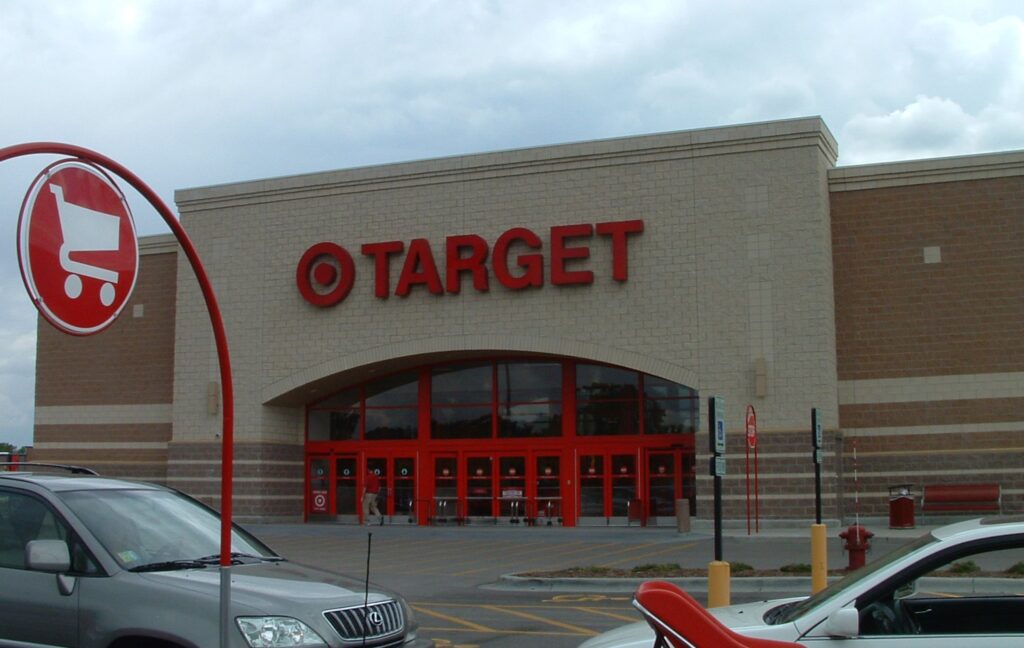
This upcoming February will mark the end of another era for a recovering socially conscious brand. Target Chief Executive Officer Brian Cornell will step down in February 2026, ceding the top post after 11 years to longtime company veteran and Chief Operating Officer Michael Fiddelke. Under Cornell’s leadership, Target once dazzled, earning praise for modern store overhauls, pandemic-era growth, and a beam of corporate prestige. But according to a senior writer at Fortune, “Target reported yet another quarter of weak financial results, with comparable sales down 1.9% and the cheap-chic retailer reaffirmed its expectations that sales will decline by a low single digit percentage this year, projecting a third year in a row of decline.” There is no doubt at this point that the popular retailer is reeling — sliding sales, failed initiatives, and deep cultural divisions have only made Cornell’s departure all but inevitable. A Leader Defined by Ideological Overreach and Backlash Cornell’s tenure is inseparable from Target’s embrace and eventual retreat from deeply polarizing social initiatives. DEI Investment to DEI Retreat: In 2020, Target CEO Brian Cornell said George Floyd’s murder had a personal impact on him and just several months after the murder, Target pledged to increase its Black workforce by 20% throughout the company over three years and take other steps to “advance racial equity.” The following year, Target committed to spending more than $2 billion with Black-owned businesses by the end of 2025. In 2022, the Bullseye-logoed company was honored for its “outstanding commitment to DEI” by the Executive Leadership Council, who is the “preeminent global membership organization for Black current and former CEOs, senior executives,” amongst entrepreneurs, and other leaders. In 2023, Cornell defended Target’s bold commitments to DEI, saying they ‘fueled much of their growth’ over the years. However, his tune quickly changed at the beginning of this year. Target quietly rolled back a broad slate of their diversity, equity, and inclusion goals. In a post online the long running department store openly admitted to halting future surveys that went to the Human Rights Campaign’s Corporate Equality Index and they also said they would conclude their Racial Equity Action and Change (REACH) initiatives this year. The announcement generated strong recoil, including from the granddaughters of a founding family member, who condemned the reversal, describing their personal feelings as “shocked and dismayed.” Nevertheless, Target rightfully surrendered to consumer boycotts, online hysteria, and conservative customer backlash. Pride Merchandise Firestorm: In May 2023, Target’s Pride Collection came under attack for selling “tuck-friendly” items within their “kid’s section.” The resulting boycott triggered major stock dips, “wiping out $10 billion in market value in just ten days and erasing $25 billion in shareholder value over the course of six months, its worst performance and longest losing streak in 23 years.” There were also threats against employees, and store vandalism, which ultimately forced Target to pull back their initial offerings and move displays to the back of some of their stores. The State of Florida and America First Legal joined forces to file a class action lawsuit against the popular retailer for “misleading and defrauding investors over market risks of LGBTQ activism” – litigation that is still playing out in court months later. Just one year later, in Target’s 2024 press release just one day ahead of “Pride Month,” they said their company would only be selling their pride-related collection of products and items in “adult apparel and home and food and beverage” sections of their store. Moreover, since the eye-opening tragedy, in the two years to follow the retail giant has scaled back their pride displays and merchandise. More notably, viral posts online and articles from this past June (2025) show Target had been prioritizing USA-themed apparel over LGBT merchandise during Pride Month. Investor Fraud Lawsuit: Amid DEI pledges coming to an end, shareholders led by the City of Riviera Beach Police Pension Fund in Florida filed suit alleging Target misled them on the financial risks tied to its social policies and ESG commitments. According to early reporting, “The lawsuit said the retailer, CEO Brian Cornell and other officials failed to disclose the risk of consumer boycotts stemming from Target’s Environmental, Social, and Governance and Diversity, Equity, and Inclusion initiatives.” Reuters also noted in their original report that Target’s share price fell 22% on November 20, 2024, wiping out about $15.7 billion of market value. Caught Between Culture Wars: The company has now found itself alienating both ends of the political spectrum — progressive consumers have become upset by recently announced DEI rollbacks, while dedicated conservative customers have become infuriated by “woke” merchandise. The result? A socially conscious brand who successfully racialized division, suffers with plunging sales year after year, and finally pressures their CEO to resign.  A Strategic Pivot or Further Retreat? Even before Cornell’s announced exit, the company’s trajectory was in free fall. According to many media reports, “Target reported a 21% drop in net income in the quarter ended August 2. Sales were down slightly, and the company reported a 1.9% dip in comparable sales – those from established physical stores and online channels. Target has seen flat or declining comparable sales in eight of the past ten quarters including the latest period.” The board’s choice of Michael Fiddelke, a 20-year insider to succeed Cornell signals continuity, not upheaval. Neil Saunders, who serves as the Managing Director of GlobalData Retail said he had mixed feelings about the promotion of Fiddelke, other analysts think the retail veteran may lack the fresh perspective needed to reset Target’s faltering brand connection. New Tolerance Campaign’s Approach At the New Tolerance Campaign, we value consistency, courage, and coalition – not performative virtue signaling. According to their own website, Target deems their core purpose as, “help all families discover the joy of everyday life.” The commitments they outlined are simple: “more for your money, the best shopping experience, a healthy, happy and valued team, a brighter future, ethical business practices.” Simply put, the Target Corporation’s mission, corporate strategy and commitments

Blog

The NFL’s End Zone Sermons Are Driving Fans From The Sport

As an avid enjoyer of pro-football and a yearly fantasy team player, I have watched the National Football League’s (NFL) slide from America’s favorite sport into America’s biggest lecture hall with growing disgust. For the sixth consecutive season, the league has announced it will keep stenciling hollow platitudes in its end zones — messages like “End Racism,” “Stop Hate,” “Choose Love,” and the new addition “Inspire Change.” They say it’s about unity. I say it’s about pandering. And the keyboard warriors they’re pandering to? They don’t even watch football. Football’s magic has always been its ability to bring people together who disagree on almost everything else. You can have political rivals sitting side by side in the stands, screaming in unison when the home team scores. After all, this mission is exactly what the NFL used to sell: a shared cultural space above the fray. But now, the league insists on dragging the fray into the one sacred place millions of people once went to get away from it. Preaching to the Wrong Crowd The NFL is bending over backwards to impress the cancel culture class — the same people who spent years mocking football as too violent, too masculine, or too toxic. These are not the folks packing stadiums on Sunday afternoons, spending all day watching the game with their fantasy cohorts and they’re certainly not buying their favorite player’s jersey to wear every week. In fact, many of them openly disdain the game, the fans, and the culture around it. Yet the NFL caters to them with high-profile gestures that do nothing for the sport’s actual supporters. This is like a steakhouse changing its menu to include plant-based options in order to appease militant vegans all while ignoring the regulars who keep the lights on. And the message to loyal fans couldn’t be clearer: your escape, your tradition, your favorite pastime still comes with a side of moral instruction, whether you asked for it or not. Virtue Signaling Over Victory The league wants to be seen as brave, as leading the charge for justice. But real courage isn’t slapping slogans on the turf. Real courage is doing the hard, unglamorous work that doesn’t get you applause at awards banquets — its funding mentorship programs, supporting at-risk youth, partnering with communities to create opportunity. Those are things that could change lives. Instead, we get “Choose Love” painted in the end zone while players are arrested for assault in the offseason and the league quietly buries concussion data. Instead, we get “Inspire Change” despite multiple players driving their expensive sports cars recklessly through various major cities and suburban communities. What the NFL is doing is hypocrisy dressed up as heroism. The league is using the field to buy social credibility while avoiding the heavy lifting that real change requires. The Fans See Through It Fans aren’t stupid. They know when they’re being sold something useless. They know when the sport they love is being used as a billboard for causes and slogans that have nothing to do with the game. And frankly, they’re tired of it. Sure, there will always be those who say, “What’s the harm? It’s just words painted in the artificial grass.” But if it were really harmless, the league wouldn’t need to make a press release or plant an exclusive story with one of their loyal media partners about it every single year. This is about narrative control, it’s about appeasing the keyboard warriors, it’s about reconciling with the demands of the entertainment industry before they agree to costly advertisement deals and multi-million-dollar sponsorship opportunities. This is all about making sure every touchdown, every camera pan, every highlight reel reinforces a culturally controlled message the league wants you to internalize. The problem isn’t that the messages are overly controversial; it’s that the NFL has decided there’s only one acceptable point of view. That’s not unity – that’s ideological conformity. And it’s exactly the opposite of tolerance. Sports Arenas Aren’t For Political Soapboxes The NFL is supposed to be the great escape. After all, last regular season’s average viewership consisted of 17.5 million viewers. For three hours (at the very least), fans should be able to leave politics, culture wars, and endless media outrage behind. They don’t come to be scolded or converted, rather they come to cheer, to boo, to high-five strangers in the next row. That’s the alchemy that makes sports special. When you turn the game into a political soapbox, you destroy that magic while creating even more division. This is the same league that once threatened to penalize players for wearing custom cleats honoring fallen police officers and victims of September 11th, but now they celebrate political messages as long as they’re in line with leftwing corporate-approved causes. The hypocrisy is staggering. The NFL has made it clear: some messages are welcome, others are not. It’s not about free expression, it’s about the right expression. A Better Way Forward If the NFL truly wants to help, here’s an idea: take the millions you spend on marketing and public relations around these slogans and put them into measurable community impact. Sponsor trades programs in struggling towns. Invest in inner-city athletic facilities. Fund student athlete scholarships. Help rebuild neighborhoods devastated by crime or addiction. Leave the end zones alone. Let the game be the game. Let fans of every background and belief come together without having a political message shoved in their faces. Closing Whistle The NFL’s job is to bring people together through the sport of football. Every time they use the field as a political pulpit, they drive a wedge between fans. They alienate the people who actually keep the league alive. And for what? Applause from people who wouldn’t be caught dead in a stadium? It’s time for the league to stop chasing the approval of the anti-football crowd and start respecting the fans who’ve been there all along. Keep politics out of the end zone. Bring back the game we came

Scroll to Top